

Close Menu
Meteorological Technology International
  • News
    • A-E
      • Agriculture
      • Automated Weather Stations
      • Aviation
      • Climate Measurement
      • Data
      • Developing Countries
      • Digital Applications
      • Early Warning Systems
      • Extreme Weather
    • G-P
      • Hydrology
      • Lidar
      • Lightning Detection
      • New Appointments
      • Nowcasting
      • Numerical Weather Prediction
      • Polar Weather
    • R-S
      • Radar
      • Rainfall
      • Remote Sensing
      • Renewable Energy
      • Satellites
      • Solar
      • Space Weather
      • Supercomputers
    • T-Z
      • Training
      • Transport
      • Weather Instruments
      • Wind
      • World Meteorological Organization
      • Meteorological Technology World Expo
  • Features
  • Online Magazines
    • January 2026
    • April 2025
    • January 2025
    • September 2024
    • April 2024
    • Archive Issues
    • Subscribe Free!
  • Opinion
  • Videos
  • Supplier Spotlight
  • Expo
LinkedIn X (Twitter) Facebook
  • Sign-up for Free Weekly E-Newsletter
  • Meet the Editors
  • Contact Us
  • Media Pack
LinkedIn Facebook
Subscribe
Meteorological Technology International
  • News
      • Agriculture
      • Automated Weather Stations
      • Aviation
      • Climate Measurement
      • Data
      • Developing Countries
      • Digital Applications
      • Early Warning Systems
      • Extreme Weather
      • Hydrology
      • Lidar
      • Lightning Detection
      • New Appointments
      • Nowcasting
      • Numerical Weather Prediction
      • Polar Weather
      • Radar
      • Rainfall
      • Remote Sensing
      • Renewable Energy
      • Satellites
      • Solar
      • Space Weather
      • Supercomputers
      • Training
      • Transport
      • Weather Instruments
      • Wind
      • World Meteorological Organization
      • Meteorological Technology World Expo
  • Features
  • Online Magazines
    1. January 2026
    2. September 2025
    3. April 2025
    4. January 2025
    5. September 2024
    6. April 2024
    7. January 2024
    8. September 2023
    9. April 2023
    10. Archive Issues
    11. Subscribe Free!
    Featured
    November 27, 2025

    In this Issue – January 2026

    By Hazel KingNovember 27, 2025
    Recent

    In this Issue – January 2026

    November 27, 2025

    In this Issue – September 2025

    August 11, 2025

    In this Issue – April 2025

    April 15, 2025
  • Opinion
  • Videos
  • Supplier Spotlight
  • Expo
Facebook LinkedIn
Subscribe
Meteorological Technology International
Climate Measurement

WMO and ECMWF launch web tool to assess quality of weather observations

Paul WillisBy Paul WillisMarch 25, 20202 Mins Read
Share LinkedIn Facebook Twitter Email
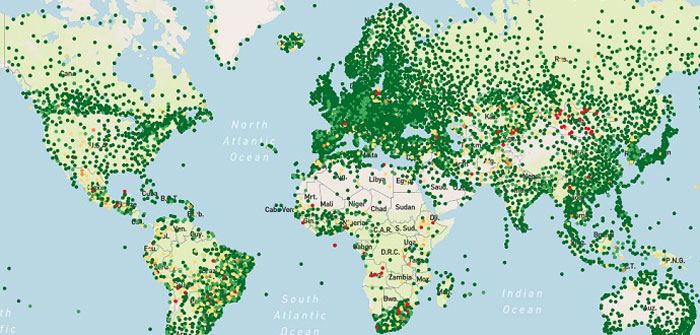
Six-hour WDQMS land-surface observation quality map (surface pressure) on March 9, 2020 (green means the data is useful for NWP purposes)
Share
LinkedIn Facebook Twitter Email

The European Centre for Medium-Range Weather Forecasts (ECMWF) has joined forces with the World Meteorological Organization (WMO) to create a new online tool to monitor the availability and quality of global meteorological observations.

The new web-based system that was launched last week monitors the performance of the WMO’s Integrated Global Observing System (WIGOS).

The software will form part of the WIGOS Data Quality Monitoring System (WDQMS), which assesses the availability and quality of land-based observations of weather conditions at Earth’s surface.

WDQMS relies on near-real-time monitoring data from three global numerical weather prediction (NWP) centers besides the ECMWF: the German national meteorological service (DWD), the Japan Meteorological Agency (JMA) and the US National Centers for Environmental Prediction (NCEP).

It works by comparing the number of observations received from the four participating centers to those scheduled to be ingested. Any discrepancies between what was scheduled and what was actually observed are then flagged up and investigated.

Performance reports on the availability and quality of meteorological observations will displayed as maps available in three different time formats – six-hourly intervals, daily intervals and, in the future, monthly intervals.

“For the first time, this new system is able to collect six-hourly quality monitoring reports from the four WIGOS Monitoring Centres and store the data in the WDQMS database at ECMWF,” said ECMWF scientist Cristina Prates. “The data is then aggregated and the calculated statistics compared against performance thresholds.”

There are also plans to extend the tool to include marine and aircraft observations.

Previous ArticleStudy of fault lines uncovers theory about why Japanese tsunami so devastating
Next Article Tech firm Mellanox to be part of build for next-gen European supercomputer

Read Similar Stories

Climate Measurement

Study identifies atmospheric trigger behind flash droughts in Puerto Rico

April 15, 20263 Mins Read
Satellites

AI tool uses weather satellite data to map ocean currents in near real time

April 14, 20263 Mins Read
Climate Measurement

New tool speeds up climate model evaluation

April 13, 20262 Mins Read
Latest News

Northumbria University secures £4m to study Earth’s radiation belts

April 16, 2026

AI model improves real-time prediction of wildfire spread

April 16, 2026

Study identifies atmospheric trigger behind flash droughts in Puerto Rico

April 15, 2026

Receive breaking stories and features in your inbox each week, for free


Enter your email address:


Supplier Spotlights
  • MicroStep-MIS
Getting in Touch
  • Contact Us / Advertise
  • Meet the Editors
  • Media Pack
  • Free Weekly E-Newsletter
Our Social Channels
  • Facebook
  • LinkedIn
© 2026 UKi Media & Events a division of UKIP Media & Events Ltd
  • Cookie Policy
  • Privacy Policy
  • Terms and Conditions
  • Notice and Takedown Policy

Type above and press Enter to search. Press Esc to cancel.