


Close Menu
Meteorological Technology International
  • News
    • A-E
      • Agriculture
      • Automated Weather Stations
      • Aviation
      • Climate Measurement
      • Data
      • Developing Countries
      • Digital Applications
      • Early Warning Systems
      • Extreme Weather
    • G-P
      • Hydrology
      • Lidar
      • Lightning Detection
      • New Appointments
      • Nowcasting
      • Numerical Weather Prediction
      • Polar Weather
    • R-S
      • Radar
      • Rainfall
      • Remote Sensing
      • Renewable Energy
      • Satellites
      • Solar
      • Space Weather
      • Supercomputers
    • T-Z
      • Training
      • Transport
      • Weather Instruments
      • Wind
      • World Meteorological Organization
      • Meteorological Technology World Expo
  • Features
  • Online Magazines
    • January 2026
    • April 2025
    • January 2025
    • September 2024
    • April 2024
    • Archive Issues
    • Subscribe Free!
  • Opinion
  • Videos
  • Supplier Spotlight
  • Expo
LinkedIn X (Twitter) Facebook
  • Sign-up for Free Weekly E-Newsletter
  • Meet the Editors
  • Contact Us
  • Media Pack
LinkedIn Facebook
Subscribe
Meteorological Technology International
  • News
      • Agriculture
      • Automated Weather Stations
      • Aviation
      • Climate Measurement
      • Data
      • Developing Countries
      • Digital Applications
      • Early Warning Systems
      • Extreme Weather
      • Hydrology
      • Lidar
      • Lightning Detection
      • New Appointments
      • Nowcasting
      • Numerical Weather Prediction
      • Polar Weather
      • Radar
      • Rainfall
      • Remote Sensing
      • Renewable Energy
      • Satellites
      • Solar
      • Space Weather
      • Supercomputers
      • Training
      • Transport
      • Weather Instruments
      • Wind
      • World Meteorological Organization
      • Meteorological Technology World Expo
  • Features
  • Online Magazines
    1. January 2026
    2. September 2025
    3. April 2025
    4. January 2025
    5. September 2024
    6. April 2024
    7. January 2024
    8. September 2023
    9. April 2023
    10. Archive Issues
    11. Subscribe Free!
    Featured
    November 27, 2025

    In this Issue – January 2026

    By Hazel KingNovember 27, 2025
    Recent

    In this Issue – January 2026

    November 27, 2025

    In this Issue – September 2025

    August 11, 2025

    In this Issue – April 2025

    April 15, 2025
  • Opinion
  • Videos
  • Supplier Spotlight
  • Expo
Facebook LinkedIn
Subscribe
Meteorological Technology International
Automated Weather Stations

UNDP launches 17 air quality monitoring stations in Aral Sea region

Elizabeth BakerBy Elizabeth BakerJune 20, 20253 Mins Read
Share LinkedIn Facebook Twitter Email
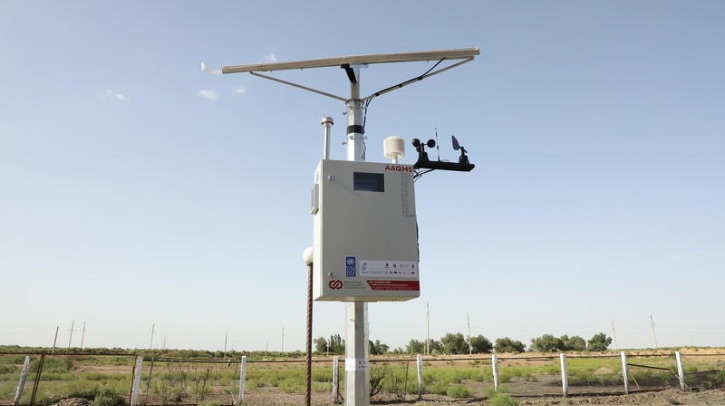
An automatic air quality monitoring stations stands against a clear blue sky.
Share
LinkedIn Facebook Twitter Email

The UNDP has installed 17 automatic air quality monitoring stations in the Aral Sea region to protect the health of more than two million residents and inform decisions in environmental policy.

Powering climate measurements

The new network provides 24/7 automatic measurement of key air pollutants: hydrogen sulfide (H₂S), ozone (O₃), nitrogen dioxide (NO₂), ammonia (NH₃), carbon monoxide (CO), sulfur dioxide (SO₂), as well as fine particulate matter PM2.5 and PM10. The meteorological parameters it records include wind speed and direction, humidity, temperature and atmospheric pressure.

To ensure the sustainability of the project, each station is completely autonomous due to their solar panels. This is also to ensure uninterrupted operation even during dust storms characteristic of the region.
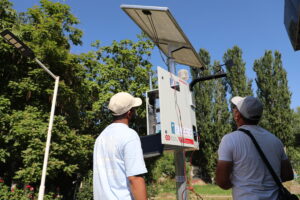
Two users look up at a weather monitoring station with solar panel.
Credit: UNDP in Uzbekistan

Key partners

The project has been implemented by the United Nations Development Programme with financial support from the UN Multi-Partner Trust Fund for Human Security for the Aral Sea region in Uzbekistan (MPTF-4), Uzbekistan, Norway, the European Union, Finland, South Korea, Germany, and the Alwaleed Philanthropies charitable organization.

The Ministry of Ecology, Environmental Protection and Climate Change, Uzhydromet, the Ministry of Health, and the Ministry of Agriculture of the Republic of Uzbekistan can now exchange data in real time and develop preventive measures to inform residents and farmers about potential adverse consequences.

For healthcare workers, the network will function as an early warning system, preventing exacerbations of respiratory diseases. Agricultural enterprises and farmers will receive data on climatic conditions to optimize field work. Hydrological services will use the information to develop environmental protection programs, environmental organizations use it for scientific research. Meteorological services are also expected to improve forecast accuracy thanks to additional atmospheric data.
 Two women are tending to a garden, one kneeling and the other bending over plants.

Local involvement

The project has been implemented within the framework of the initiative ‘Building knowledge and skills of local partners and communities to address environmental insecurities through innovative air, land and water management solutions in the Aral Sea region’.
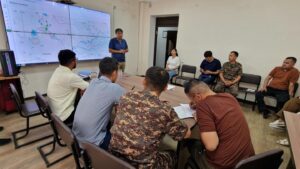
The strategic placement of monitoring stations near educational institutions and in residential areas with high population density is intended to reflect the principle of ‘Leave No One Behind’. According to the UNDP, this network will enable the integration of observation results into global climate change programs and compare indicators with international standards.

As part of the project, comprehensive training has been conducted for national specialists in the operation and maintenance of monitoring stations. Local personnel have been trained in the principles of working with high-precision equipment, sensor calibration procedures, data interpretation and timely response to exceeding maximum permissible concentrations of pollutants.
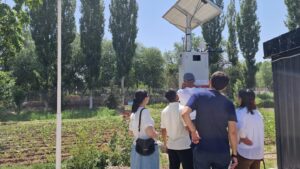
A group of five people look up at a weather monitoring station with solar panel.

Alisher Utemisov, UNDP program manager in Karakalpakstan, noted, “Climate solutions are investments in human capacity development and the environment. In the Aral Sea region, by integrating climate goals with national development plans, we create synergy – strengthening people’s resilience to climate change, improving their health, expanding their opportunities. Every farmer who understands climatic conditions can not only protect their harvest but also ensure food security for the entire community. This is the path to just and sustainable development.”

For more of the top insights into the future of air quality monitoring, read Meteorological Technology International’s exclusive Tech Insider feature

Previous ArticleEUMETSAT’s Meteosat-12 begins delivering prime geostationary meteorological satellite service for Europe
Next Article CAMS reports increasing levels of ozone pollution in Europe in June

Read Similar Stories

Climate Measurement

Study identifies atmospheric trigger behind flash droughts in Puerto Rico

April 15, 20263 Mins Read
Satellites

AI tool uses weather satellite data to map ocean currents in near real time

April 14, 20263 Mins Read
Climate Measurement

New tool speeds up climate model evaluation

April 13, 20262 Mins Read
Latest News

Northumbria University secures £4m to study Earth’s radiation belts

April 16, 2026

AI model improves real-time prediction of wildfire spread

April 16, 2026

Study identifies atmospheric trigger behind flash droughts in Puerto Rico

April 15, 2026

Receive breaking stories and features in your inbox each week, for free


Enter your email address:


Supplier Spotlights
  • Meteorage
Getting in Touch
  • Contact Us / Advertise
  • Meet the Editors
  • Media Pack
  • Free Weekly E-Newsletter
Our Social Channels
  • Facebook
  • LinkedIn
© 2026 UKi Media & Events a division of UKIP Media & Events Ltd
  • Cookie Policy
  • Privacy Policy
  • Terms and Conditions
  • Notice and Takedown Policy

Type above and press Enter to search. Press Esc to cancel.