

Close Menu
Meteorological Technology International
  • News
    • A-E
      • Agriculture
      • Automated Weather Stations
      • Aviation
      • Climate Measurement
      • Data
      • Developing Countries
      • Digital Applications
      • Early Warning Systems
      • Extreme Weather
    • G-P
      • Hydrology
      • Lidar
      • Lightning Detection
      • New Appointments
      • Nowcasting
      • Numerical Weather Prediction
      • Polar Weather
    • R-S
      • Radar
      • Rainfall
      • Remote Sensing
      • Renewable Energy
      • Satellites
      • Solar
      • Space Weather
      • Supercomputers
    • T-Z
      • Training
      • Transport
      • Weather Instruments
      • Wind
      • World Meteorological Organization
      • Meteorological Technology World Expo
  • Features
  • Online Magazines
    • January 2026
    • April 2025
    • January 2025
    • September 2024
    • April 2024
    • Archive Issues
    • Subscribe Free!
  • Opinion
  • Videos
  • Supplier Spotlight
  • Expo
LinkedIn X (Twitter) Facebook
  • Sign-up for Free Weekly E-Newsletter
  • Meet the Editors
  • Contact Us
  • Media Pack
LinkedIn Facebook
Subscribe
Meteorological Technology International
  • News
      • Agriculture
      • Automated Weather Stations
      • Aviation
      • Climate Measurement
      • Data
      • Developing Countries
      • Digital Applications
      • Early Warning Systems
      • Extreme Weather
      • Hydrology
      • Lidar
      • Lightning Detection
      • New Appointments
      • Nowcasting
      • Numerical Weather Prediction
      • Polar Weather
      • Radar
      • Rainfall
      • Remote Sensing
      • Renewable Energy
      • Satellites
      • Solar
      • Space Weather
      • Supercomputers
      • Training
      • Transport
      • Weather Instruments
      • Wind
      • World Meteorological Organization
      • Meteorological Technology World Expo
  • Features
  • Online Magazines
    1. January 2026
    2. September 2025
    3. April 2025
    4. January 2025
    5. September 2024
    6. April 2024
    7. January 2024
    8. September 2023
    9. April 2023
    10. Archive Issues
    11. Subscribe Free!
    Featured
    November 27, 2025

    In this Issue – January 2026

    By Hazel KingNovember 27, 2025
    Recent

    In this Issue – January 2026

    November 27, 2025

    In this Issue – September 2025

    August 11, 2025

    In this Issue – April 2025

    April 15, 2025
  • Opinion
  • Videos
  • Supplier Spotlight
  • Expo
Facebook LinkedIn
Subscribe
Meteorological Technology International
Climate Measurement

Study reveals world’s most vulnerable coastal city to climate change

Paul WillisBy Paul WillisFebruary 13, 20202 Mins Read
Share LinkedIn Facebook Twitter Email
Share
LinkedIn Facebook Twitter Email

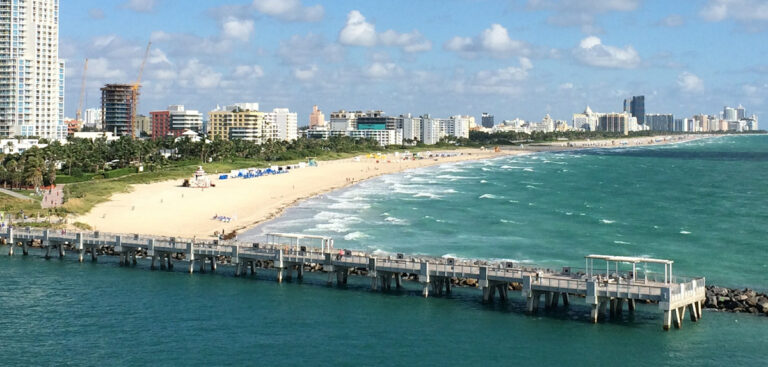
Miami’s future looks to be increasingly in doubt due to climate change with new research naming it “the most vulnerable major coastal city in the world.”

The study by Resources for the Future, a non-partisan economic think-tank, said that hundreds of billions of dollars in assets in the city were under threat from winds, storm surges, coastal flooding and sea-level rise.

Florida, the US state where Miami is located, was facing an equally uncertain future with the 70-page report – entitled Florida Climate Outlook – predicting that “100-year floods” could occur far more frequently in many parts of the state, putting at risk 300,000 homes, 2,500 miles of road, 30 schools and four hospitals.

Daniel Raimi, a senior research associate at RFF and lecturer at the Gerald R. Ford School of Public Policy at the University of Michigan, told Scientific American that “the sheer numbers of people who will feel direct climate impacts in their lifetimes is very, very significant”, adding that it was necessary for the USA to bring in public policies right now “to start reducing the risks”.

Although climate change is likely to have a significant impact throughout Florida, its cities are likely to be the worst affected due to their higher populations and densities. Miami and Tampa and their environs are likely to experience severe effects from rising sea levels, the report noted, which are projected to go up by between 8in and 12in by 2040.

According to the report, nearly half a million residents of the state could experience regular flooding. Meanwhile, many of the state’s most famous areas of natural beauty face disappearing under rising seas.

“Several major tourist attractions, including the Everglades, Biscayne National Park and Miami Beach, are largely situated on land less than 3ft above the high-water mark and may become permanently submerged by the end of the century,” the report states.

Previous ArticleOcean currents changing due to Arctic sea ice melt
Next Article Increase in wildfires leads to more snowpack in mountain areas, says study

Read Similar Stories

Extreme Weather

AI model improves real-time prediction of wildfire spread

April 16, 20263 Mins Read
Climate Measurement

Study identifies atmospheric trigger behind flash droughts in Puerto Rico

April 15, 20263 Mins Read
Satellites

AI tool uses weather satellite data to map ocean currents in near real time

April 14, 20263 Mins Read
Latest News

Northumbria University secures £4m to study Earth’s radiation belts

April 16, 2026

AI model improves real-time prediction of wildfire spread

April 16, 2026

Study identifies atmospheric trigger behind flash droughts in Puerto Rico

April 15, 2026

Receive breaking stories and features in your inbox each week, for free


Enter your email address:


Supplier Spotlights
  • Adolf Thies GmbH & Co. KG
Getting in Touch
  • Contact Us / Advertise
  • Meet the Editors
  • Media Pack
  • Free Weekly E-Newsletter
Our Social Channels
  • Facebook
  • LinkedIn
© 2026 UKi Media & Events a division of UKIP Media & Events Ltd
  • Cookie Policy
  • Privacy Policy
  • Terms and Conditions
  • Notice and Takedown Policy

Type above and press Enter to search. Press Esc to cancel.