


Close Menu
Meteorological Technology International
  • News
    • A-E
      • Agriculture
      • Automated Weather Stations
      • Aviation
      • Climate Measurement
      • Data
      • Developing Countries
      • Digital Applications
      • Early Warning Systems
      • Extreme Weather
    • G-P
      • Hydrology
      • Lidar
      • Lightning Detection
      • New Appointments
      • Nowcasting
      • Numerical Weather Prediction
      • Polar Weather
    • R-S
      • Radar
      • Rainfall
      • Remote Sensing
      • Renewable Energy
      • Satellites
      • Solar
      • Space Weather
      • Supercomputers
    • T-Z
      • Training
      • Transport
      • Weather Instruments
      • Wind
      • World Meteorological Organization
      • Meteorological Technology World Expo
  • Features
  • Online Magazines
    • January 2026
    • April 2025
    • January 2025
    • September 2024
    • April 2024
    • Archive Issues
    • Subscribe Free!
  • Opinion
  • Videos
  • Supplier Spotlight
  • Expo
LinkedIn X (Twitter) Facebook
  • Sign-up for Free Weekly E-Newsletter
  • Meet the Editors
  • Contact Us
  • Media Pack
LinkedIn Facebook
Subscribe
Meteorological Technology International
  • News
      • Agriculture
      • Automated Weather Stations
      • Aviation
      • Climate Measurement
      • Data
      • Developing Countries
      • Digital Applications
      • Early Warning Systems
      • Extreme Weather
      • Hydrology
      • Lidar
      • Lightning Detection
      • New Appointments
      • Nowcasting
      • Numerical Weather Prediction
      • Polar Weather
      • Radar
      • Rainfall
      • Remote Sensing
      • Renewable Energy
      • Satellites
      • Solar
      • Space Weather
      • Supercomputers
      • Training
      • Transport
      • Weather Instruments
      • Wind
      • World Meteorological Organization
      • Meteorological Technology World Expo
  • Features
  • Online Magazines
    1. January 2026
    2. September 2025
    3. April 2025
    4. January 2025
    5. September 2024
    6. April 2024
    7. January 2024
    8. September 2023
    9. April 2023
    10. Archive Issues
    11. Subscribe Free!
    Featured
    November 27, 2025

    In this Issue – January 2026

    By Hazel KingNovember 27, 2025
    Recent

    In this Issue – January 2026

    November 27, 2025

    In this Issue – September 2025

    August 11, 2025

    In this Issue – April 2025

    April 15, 2025
  • Opinion
  • Videos
  • Supplier Spotlight
  • Expo
Facebook LinkedIn
Subscribe
Meteorological Technology International
Climate Measurement

NOC launches £2.5m project to study the ocean’s heat and carbon sequestration

Elizabeth BakerBy Elizabeth BakerDecember 13, 20243 Mins Read
Share LinkedIn Facebook Twitter Email
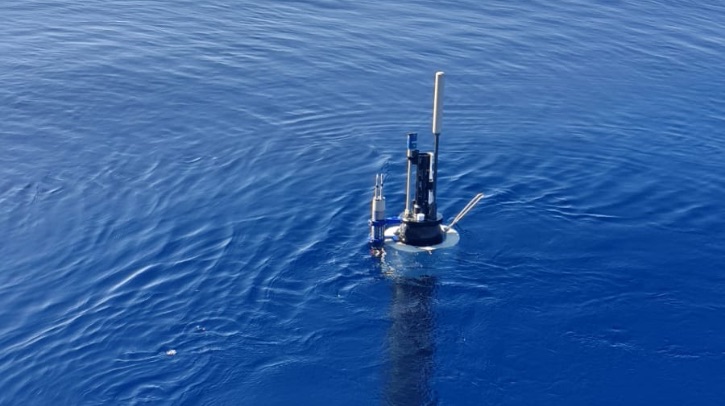
A £2.5m (US$3.2m) project led by the University of Southampton and the National Oceanography Centre (NOC) will deploy sensors onboard autonomous profiling floats to study the ocean’s heat and carbon sequestration.
Autonomous profiling float deployed in the ocean
Share
LinkedIn Facebook Twitter Email

A £2.5m (US$3.2m) project led by the University of Southampton and the National Oceanography Centre (NOC) will deploy sensors on board autonomous profiling floats to study the ocean’s heat and carbon sequestration.

Scientists will look at how the ocean breathes through mixing – tiny turbulent movements that pull water, heat and chemicals from its surface down into the deep. This ventilation helps to regulate the Earth’s climate, buffering against the impacts of human-induced climate change. Mixing also reportedly plays a key role in regulating ocean current systems, such as the Atlantic meridional overturning circulation (AMOC).

“Small-scale mixing plays a crucial role in how the ocean exchanges carbon and heat with the atmosphere and stores it below the surface,” said Dr Bieito Fernandez Castro, a lecturer in physical oceanography at the University of Southampton, who is leading the project. “Yet much about this crucial process remains a mystery, so there’s a higher degree of uncertainty in our estimates than we’d like. It happens on such small scales (ranging from centimeters to kilometers) that it has been hard to measure, meaning current ocean and climate models fail to capture the intricate dynamics at work.”

Autonomous floats

The REMIX-TUNE project has been awarded £2.5m (US$3.2m) from the European Research Council to deploy a fleet of autonomous floats in key regions of deep-water formation where much of the heat and carbon sequestration takes place – namely the North Atlantic and Southern Ocean.

Equipped with turbulence sensors and onboard computers, the floats will pass through the water column from the surface down to depths of up to 2,000m and back up again over several years, capturing detailed local data on how water mixes at the mesoscale (large eddies) and microscale (tiny, chaotic swirls).

Dr Castro added, “These profiling floats have been used since the 2000s to measure the temperature and salinity of the ocean, as well as other properties, to help with forecasting and modeling. But they were incapable of observing mixing until now, so it’s exciting to deploy them in significant numbers for this purpose.”

A new generation of ocean-climate models

The data captured is expected to generate the first comprehensive, observation-based global database measuring the role of mixing in ocean ventilation. This detailed new understanding is to feed into the next generation of ocean-climate models, improving their ability to simulate the ocean’s role in storing heat and greenhouse gases.

Dr Alex Megann at NOC, a co-investigator on the project, commented, “Combining the new data with existing hydrographic profiles from the global Argo program, we can reconstruct mixing over the past 25 years over the global ocean to provide much more accurate mixing estimates.

“We’ll then use a model called NEMO, which is the ocean component of the UK’s contribution to the Intergovernmental Panel on Climate Change (IPCC), to use our improved estimates of mixing to give a much clearer picture of how ocean ventilation regulates our climate.”

In related news, the Institute of Arctic and Alpine Research (INSTAAR) at the University of Colorado Boulder recently developed a new model for predicting marine heat waves and extreme ocean acidity. The model is adept at forecasting these events up to a year in advance, with varying degrees of certainty based on the location. Click here to read the full story.

Previous ArticleIn this Issue – January 2025
Next Article VIDEO: Researchers develop generative AI climate model that’s 25 times faster than current models

Read Similar Stories

Climate Measurement

Study identifies atmospheric trigger behind flash droughts in Puerto Rico

April 15, 20263 Mins Read
Satellites

AI tool uses weather satellite data to map ocean currents in near real time

April 14, 20263 Mins Read
Climate Measurement

New tool speeds up climate model evaluation

April 13, 20262 Mins Read
Latest News

Northumbria University secures £4m to study Earth’s radiation belts

April 16, 2026

AI model improves real-time prediction of wildfire spread

April 16, 2026

Study identifies atmospheric trigger behind flash droughts in Puerto Rico

April 15, 2026

Receive breaking stories and features in your inbox each week, for free


Enter your email address:


Supplier Spotlights
  • Baron
Getting in Touch
  • Contact Us / Advertise
  • Meet the Editors
  • Media Pack
  • Free Weekly E-Newsletter
Our Social Channels
  • Facebook
  • LinkedIn
© 2026 UKi Media & Events a division of UKIP Media & Events Ltd
  • Cookie Policy
  • Privacy Policy
  • Terms and Conditions
  • Notice and Takedown Policy

Type above and press Enter to search. Press Esc to cancel.