


Close Menu
Meteorological Technology International
  • News
    • A-E
      • Agriculture
      • Automated Weather Stations
      • Aviation
      • Climate Measurement
      • Data
      • Developing Countries
      • Digital Applications
      • Early Warning Systems
      • Extreme Weather
    • G-P
      • Hydrology
      • Lidar
      • Lightning Detection
      • New Appointments
      • Nowcasting
      • Numerical Weather Prediction
      • Polar Weather
    • R-S
      • Radar
      • Rainfall
      • Remote Sensing
      • Renewable Energy
      • Satellites
      • Solar
      • Space Weather
      • Supercomputers
    • T-Z
      • Training
      • Transport
      • Weather Instruments
      • Wind
      • World Meteorological Organization
      • Meteorological Technology World Expo
  • Features
  • Online Magazines
    • January 2026
    • April 2025
    • January 2025
    • September 2024
    • April 2024
    • Archive Issues
    • Subscribe Free!
  • Opinion
  • Videos
  • Supplier Spotlight
  • Expo
LinkedIn X (Twitter) Facebook
  • Sign-up for Free Weekly E-Newsletter
  • Meet the Editors
  • Contact Us
  • Media Pack
LinkedIn Facebook
Subscribe
Meteorological Technology International
  • News
      • Agriculture
      • Automated Weather Stations
      • Aviation
      • Climate Measurement
      • Data
      • Developing Countries
      • Digital Applications
      • Early Warning Systems
      • Extreme Weather
      • Hydrology
      • Lidar
      • Lightning Detection
      • New Appointments
      • Nowcasting
      • Numerical Weather Prediction
      • Polar Weather
      • Radar
      • Rainfall
      • Remote Sensing
      • Renewable Energy
      • Satellites
      • Solar
      • Space Weather
      • Supercomputers
      • Training
      • Transport
      • Weather Instruments
      • Wind
      • World Meteorological Organization
      • Meteorological Technology World Expo
  • Features
  • Online Magazines
    1. January 2026
    2. September 2025
    3. April 2025
    4. January 2025
    5. September 2024
    6. April 2024
    7. January 2024
    8. September 2023
    9. April 2023
    10. Archive Issues
    11. Subscribe Free!
    Featured
    November 27, 2025

    In this Issue – January 2026

    By Hazel KingNovember 27, 2025
    Recent

    In this Issue – January 2026

    November 27, 2025

    In this Issue – September 2025

    August 11, 2025

    In this Issue – April 2025

    April 15, 2025
  • Opinion
  • Videos
  • Supplier Spotlight
  • Expo
Facebook LinkedIn
Subscribe
Meteorological Technology International
Climate Measurement

New IPCC climate report is a clarion call for urgent action

Helen NormanBy Helen NormanAugust 9, 20213 Mins Read
Share LinkedIn Facebook Twitter Email
climate change
Share
LinkedIn Facebook Twitter Email

A landmark new climate change report is a clear call for immediate action to slash greenhouse gases in the face of unprecedented and accelerating climate change, according to the World Meteorological Organization (WMO).

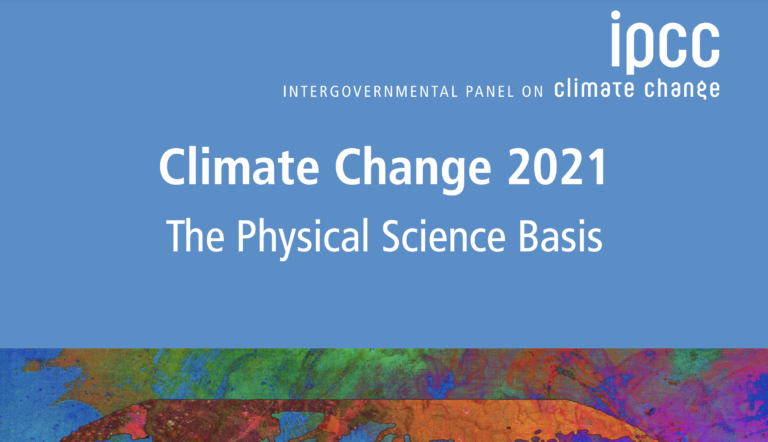
The Intergovernmental Panel on Climate Change (IPCC) Working Group I report, Climate Change 2021: the Physical Science Basis, provides the clearest and most comprehensive assessment to date of warming of the atmosphere, oceans and land. The report was based on input from 234 authors from 66 countries.

According to the report, the scale of recent changes is unprecedented in thousands, if not hundreds of thousands of years. Many changes due to past and future greenhouse gas emissions are irreversible for centuries to millennia, especially changes in the ocean, ice sheets and global sea level.

The report reveals that human-induced climate change is already affecting many weather and climate extremes in every region across the globe. Evidence of observed changes in extremes such as heatwaves, heavy precipitation, droughts, and the proportion of intense tropical cyclones, and in particular their attribution to human influence, has strengthened since the last IPCC Assessment Report in 2014.

“The harsh reality of climate change is playing out in real time before our very eyes,” said WMO secretary-general professor Petteri Taalas. “It is a foretaste of what faces future generations. Some of the negative changes are already locked into the climate system but others still can be addressed if we make strong, rapid and sustained reductions in emissions now. However, greenhouse gas concentrations, especially carbon dioxide, remain at record levels.”

“As co-founder of the IPCC, WMO pays tribute to the remarkable achievement of the scientists involved for their dedication and tireless work. We are united in our science. Science has spoken. Now it’s time to act,” added Taalas.

The IPCC report projects that in the coming decades climate changes will increase in all regions. For 1.5°C of global warming, there will be increasing heat waves, longer warm seasons and shorter cold seasons, as well as changes in precipitation patterns affecting flooding and drought occurrences. At 2°C of global warming, heat extremes would more often reach critical tolerance thresholds for agriculture and health, the report shows.

The report shows that the observed average rate of heating accelerated during the period 2006-2018 compared to the period 1971–2006. It provides new estimates of the chances of crossing the global warming level of 1.5°C in the next decades, and finds that unless there are immediate, rapid and large-scale reductions in greenhouse gas emissions, limiting warming to close to 1.5°C or even 2°C will be beyond reach.

The report shows that emissions of greenhouse gases from human activities are responsible for approximately 1.1°C during the past ten years of warming since 1850-1900. In 2020 the annual mean temperature was 1.2°C above the normal. The average temperature estimate over the next 20 years is expected to reach or exceed 1.5°C of warming. The Paris Agreement commits to pursue efforts to limit temperature increase to this level.

The Summary for Policymakers of the Working Group I contribution to the Sixth Assessment Report (AR6) as well as additional materials and information are available at https://www.ipcc.ch/report/ar6/wg1/. 

Previous ArticleSpire Global to provide radio occultation satellite data to EUMETSAT
Next Article Lancaster University awarded project to develop technology for space weather monitoring

Read Similar Stories

Climate Measurement

Study identifies atmospheric trigger behind flash droughts in Puerto Rico

April 15, 20263 Mins Read
Satellites

AI tool uses weather satellite data to map ocean currents in near real time

April 14, 20263 Mins Read
Climate Measurement

New tool speeds up climate model evaluation

April 13, 20262 Mins Read
Latest News

Northumbria University secures £4m to study Earth’s radiation belts

April 16, 2026

AI model improves real-time prediction of wildfire spread

April 16, 2026

Study identifies atmospheric trigger behind flash droughts in Puerto Rico

April 15, 2026

Receive breaking stories and features in your inbox each week, for free


Enter your email address:


Supplier Spotlights
  • Raymetrics
Getting in Touch
  • Contact Us / Advertise
  • Meet the Editors
  • Media Pack
  • Free Weekly E-Newsletter
Our Social Channels
  • Facebook
  • LinkedIn
© 2026 UKi Media & Events a division of UKIP Media & Events Ltd
  • Cookie Policy
  • Privacy Policy
  • Terms and Conditions
  • Notice and Takedown Policy

Type above and press Enter to search. Press Esc to cancel.