


Close Menu
Meteorological Technology International
  • News
    • A-E
      • Agriculture
      • Automated Weather Stations
      • Aviation
      • Climate Measurement
      • Data
      • Developing Countries
      • Digital Applications
      • Early Warning Systems
      • Extreme Weather
    • G-P
      • Hydrology
      • Lidar
      • Lightning Detection
      • New Appointments
      • Nowcasting
      • Numerical Weather Prediction
      • Polar Weather
    • R-S
      • Radar
      • Rainfall
      • Remote Sensing
      • Renewable Energy
      • Satellites
      • Solar
      • Space Weather
      • Supercomputers
    • T-Z
      • Training
      • Transport
      • Weather Instruments
      • Wind
      • World Meteorological Organization
      • Meteorological Technology World Expo
  • Features
  • Online Magazines
    • January 2026
    • April 2025
    • January 2025
    • September 2024
    • April 2024
    • Archive Issues
    • Subscribe Free!
  • Opinion
  • Videos
  • Supplier Spotlight
  • Expo
LinkedIn X (Twitter) Facebook
  • Sign-up for Free Weekly E-Newsletter
  • Meet the Editors
  • Contact Us
  • Media Pack
LinkedIn Facebook
Subscribe
Meteorological Technology International
  • News
      • Agriculture
      • Automated Weather Stations
      • Aviation
      • Climate Measurement
      • Data
      • Developing Countries
      • Digital Applications
      • Early Warning Systems
      • Extreme Weather
      • Hydrology
      • Lidar
      • Lightning Detection
      • New Appointments
      • Nowcasting
      • Numerical Weather Prediction
      • Polar Weather
      • Radar
      • Rainfall
      • Remote Sensing
      • Renewable Energy
      • Satellites
      • Solar
      • Space Weather
      • Supercomputers
      • Training
      • Transport
      • Weather Instruments
      • Wind
      • World Meteorological Organization
      • Meteorological Technology World Expo
  • Features
  • Online Magazines
    1. January 2026
    2. September 2025
    3. April 2025
    4. January 2025
    5. September 2024
    6. April 2024
    7. January 2024
    8. September 2023
    9. April 2023
    10. Archive Issues
    11. Subscribe Free!
    Featured
    November 27, 2025

    In this Issue – January 2026

    By Hazel KingNovember 27, 2025
    Recent

    In this Issue – January 2026

    November 27, 2025

    In this Issue – September 2025

    August 11, 2025

    In this Issue – April 2025

    April 15, 2025
  • Opinion
  • Videos
  • Supplier Spotlight
  • Expo
Facebook LinkedIn
Subscribe
Meteorological Technology International
Climate Measurement

China’s first overseas atmospheric background station begins operation in Antarctica

Elizabeth BakerBy Elizabeth BakerDecember 3, 20243 Mins Read
Share LinkedIn Facebook Twitter Email
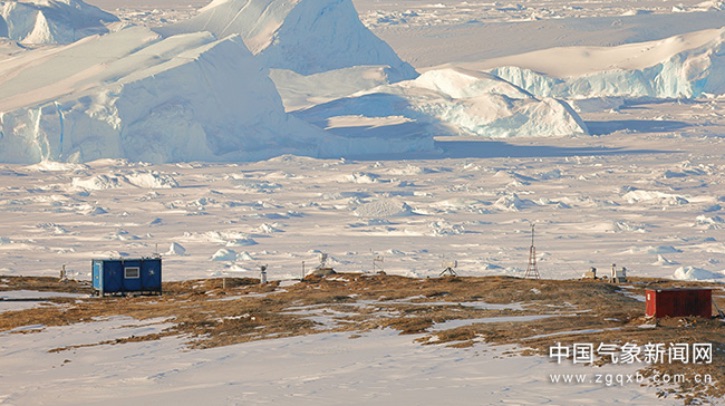
The observation field of the station. Credit: CAMS 
Share
LinkedIn Facebook Twitter Email

China’s first overseas atmospheric background station has begun operating in Antarctica as part of the China Meteorological Administration’s plans to bolster the global response to climate change.

The station has already been running for 16 years but was only officially incorporated into China’s atmospheric background station portfolio this year. During the fourth International Polar Year (IPY) from 2007 to 2008, an observation shelter of atmospheric chemistry was constructed at the Zhongshan Station in Antarctica. This was equipped with ozone spectrometers and radiation monitoring instruments and kick-started the operation of atmospheric composition observation in Antarctica. In 2010, a high-precision greenhouse gas online observing system was built at the station and officially launched the continuous online observation of carbon dioxide and methane with high temporal resolution, enabling China to become the third country worldwide to be capable of conducting this operation in Antarctica. To date, a comprehensive observing system comprising seven categories of meteorological elements, including ozone and aerosol, has been set up at the station.
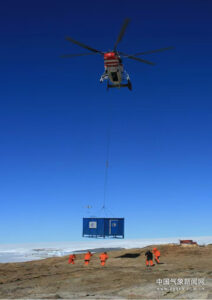
In 2008, an observation shelter of atmospheric chemistry was established at the Zhongshan Station in Antarctica. Credit: CAMS 

As a crucial component of the Antarctic Zhongshan Ice and Space Environment National Observation and Research Station operated by the Polar Research Institute of China, the atmospheric composition observation data of the Zhongshan Station has been included in the World Meteorological Organization (WMO) Antarctic Ozone Bulletin and State of Polar Climate by the China Meteorological Administration (CMA). The data has been used in scientific research into fields such as polar weather and climate change, and polar atmospheric chemistry.

According to the China Meteorological Administration, the Zhongshan National Atmospheric Background Station will conduct continuous and long-term operational observations of the concentration changes in Antarctic atmospheric components and offer a faithful presentation of the average state of the atmospheric composition and related characteristics in the region.

“Polar regions are regarded as ‘amplifiers’ of global climate change, and the observation data of the station possesses unique geographical advantages and scientific value,” said Ding Minghu, director of the Institute of Global Change and Polar Meteorology of the Chinese Academy of Meteorological Sciences.

Dr Cao Xiaozhong, deputy administrator of CMA, remarked, “Antarctica is the new ‘starting point’ of China’s meteorological endeavor.” He said that China’s meteorological departments will continue to thoroughly implement the operation and management of the station, give full play to the benefits of Antarctic meteorological observation data and draw the “Zhongshan Curve in Antarctica”, to enable deeper understanding, protection and use of Antarctica, make greater contributions to benefit mankind and build a community with a shared future for mankind.
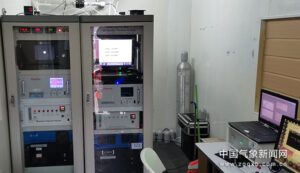
Atmospheric component online observing system of the station. Credit: CAMS

In related news, China recently issued the Action Plan on Early Warning for Climate Change Adaptation (2025-2027), which includes launching three geostationary meteorological satellites to provide high-frequency meteorological disaster monitoring and cloud early warning systems for African, Asian and Pacific countries. Click here to read the full story.

Previous ArticleSOFF and WRPP extend partnership supporting the Blue Pacific Strategy 2050
Next Article 14th Asia-Oceania Meteorological Satellite Users’ Conference begins in India

Read Similar Stories

Climate Measurement

Study identifies atmospheric trigger behind flash droughts in Puerto Rico

April 15, 20263 Mins Read
Satellites

AI tool uses weather satellite data to map ocean currents in near real time

April 14, 20263 Mins Read
Climate Measurement

New tool speeds up climate model evaluation

April 13, 20262 Mins Read
Latest News

Northumbria University secures £4m to study Earth’s radiation belts

April 16, 2026

AI model improves real-time prediction of wildfire spread

April 16, 2026

Study identifies atmospheric trigger behind flash droughts in Puerto Rico

April 15, 2026

Receive breaking stories and features in your inbox each week, for free


Enter your email address:


Supplier Spotlights
  • ZOGLAB Microsystem Co., Ltd
Getting in Touch
  • Contact Us / Advertise
  • Meet the Editors
  • Media Pack
  • Free Weekly E-Newsletter
Our Social Channels
  • Facebook
  • LinkedIn
© 2026 UKi Media & Events a division of UKIP Media & Events Ltd
  • Cookie Policy
  • Privacy Policy
  • Terms and Conditions
  • Notice and Takedown Policy

Type above and press Enter to search. Press Esc to cancel.