


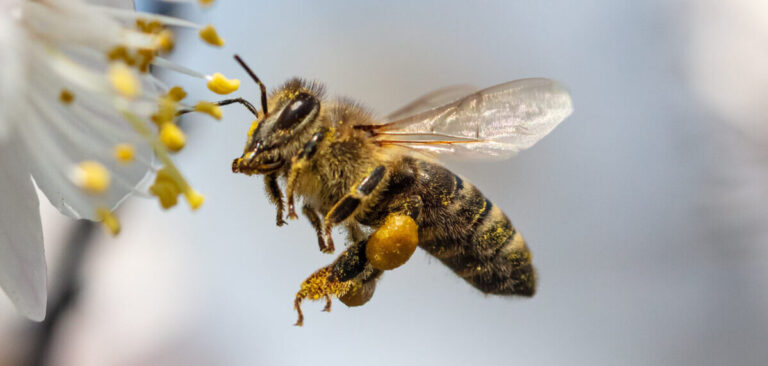
Scientists from the University of Reading and the University of Birmingham have found that pollination was reduced by up to 31% in the presence of common ground-level air pollutants, including diesel exhaust pollutants and ozone.
The study found that there were up to 70% fewer pollinators and up to 90% fewer flower visits when air pollution was present. The theory is that the pollutants react with and change the scents of flowers, making it harder for pollinating insects to sniff them out. This work suggested that pollution could contribute to the ongoing declines in pollinating insects, by making it harder for them to locate their food – pollen and nectar.
The impact that this phenomenon has in nature, where insects provide pollination of important food crops and native wildflowers, is less well understood. Therefore, this new study aimed to gather evidence to investigate how air pollution affects different pollinating insect species, some of which rely on scent more than others.
The study, funded by the Natural Environment Research Council, used a purpose-built fumigation facility to regulate levels of nitrogen oxides (NOx) – present in diesel exhaust fumes – and ozone in an open field environment. They then observed the effects these pollutants had on the pollination of black mustard plants by free-flying, locally occurring pollinating insects over the course of two summer field seasons.
During the study, they used pollution concentrations well below maximum average levels – equating to 40-50% of the limits currently defined by US law as safe for the environment. This pales in comparison with the higher levels of pollution that occur around the world due to breaches of regulations. For example, outside of London, a 2019 analysis showed illegal levels of nitrogen dioxide were recorded in local authorities in large areas of northern England, including Cheshire and Gateshead, and south England, including Wiltshire, Chichester and rural areas such as the New Forest.
Observations revealed there were 62-70% fewer pollinator visits to the plants located in polluted air. This reduction was seen in seven pollinator groups, particularly bees, moths, hoverflies and butterflies. There were also 83-90% fewer flower visits by these insects, and ultimately a 14-31% reduction in pollination, based on seed yield and other factors.
Such findings could have wide-ranging implications because insect pollination delivers hundreds of billions of pounds worth of economic value every year. It supports around 8% of the total value of agricultural food production worldwide, and 70% of all crop species, including apples, strawberries and cocoa, rely on it.
Dr Robbie Girling, associate professor in agroecology at the University of Reading, who led the project, said, “We knew from our previous lab studies that diesel exhaust can have negative effects on insect pollinators, but the impacts we found in the field were much more dramatic than we had expected.”
Dr James Ryalls, a Leverhulme Trust research fellow at the University of Reading, who conducted the study, said, “The findings are worrying because these pollutants are commonly found in the air many of us breathe every day. We know that these pollutants are bad for our health, and the significant reductions we saw in pollinator numbers and activity shows that there are also clear implications for the natural ecosystems we depend on.”
Dr Christian Pfrang, reader in atmospheric science at the University of Birmingham and a co-author on the study, said, “This truly cross-disciplinary work demonstrated very clearly how atmospheric pollutants negatively impact on pollination with direct consequences for food production as well as the resilience of our natural environment.”
Although previous laboratory studies by members of the Reading team have shown that diesel fumes can alter floral odors, this study is the first to observe a negative impact of common air pollutants on pollination in the natural environment. This research, published in the journal Environmental Pollution, is part of continuing studies into the effects of air pollution on insect health and their interactions with the environment by researchers at the University of Reading.