


Close Menu
Meteorological Technology International
  • News
    • A-E
      • Agriculture
      • Automated Weather Stations
      • Aviation
      • Climate Measurement
      • Data
      • Developing Countries
      • Digital Applications
      • Early Warning Systems
      • Extreme Weather
    • G-P
      • Hydrology
      • Lidar
      • Lightning Detection
      • New Appointments
      • Nowcasting
      • Numerical Weather Prediction
      • Polar Weather
    • R-S
      • Radar
      • Rainfall
      • Remote Sensing
      • Renewable Energy
      • Satellites
      • Solar
      • Space Weather
      • Supercomputers
    • T-Z
      • Training
      • Transport
      • Weather Instruments
      • Wind
      • World Meteorological Organization
      • Meteorological Technology World Expo
  • Features
  • Online Magazines
    • January 2026
    • April 2025
    • January 2025
    • September 2024
    • April 2024
    • Archive Issues
    • Subscribe Free!
  • Opinion
  • Videos
  • Supplier Spotlight
  • Expo
LinkedIn X (Twitter) Facebook
  • Sign-up for Free Weekly E-Newsletter
  • Meet the Editors
  • Contact Us
  • Media Pack
LinkedIn Facebook
Subscribe
Meteorological Technology International
  • News
      • Agriculture
      • Automated Weather Stations
      • Aviation
      • Climate Measurement
      • Data
      • Developing Countries
      • Digital Applications
      • Early Warning Systems
      • Extreme Weather
      • Hydrology
      • Lidar
      • Lightning Detection
      • New Appointments
      • Nowcasting
      • Numerical Weather Prediction
      • Polar Weather
      • Radar
      • Rainfall
      • Remote Sensing
      • Renewable Energy
      • Satellites
      • Solar
      • Space Weather
      • Supercomputers
      • Training
      • Transport
      • Weather Instruments
      • Wind
      • World Meteorological Organization
      • Meteorological Technology World Expo
  • Features
  • Online Magazines
    1. January 2026
    2. September 2025
    3. April 2025
    4. January 2025
    5. September 2024
    6. April 2024
    7. January 2024
    8. September 2023
    9. April 2023
    10. Archive Issues
    11. Subscribe Free!
    Featured
    November 27, 2025

    In this Issue – January 2026

    By Hazel KingNovember 27, 2025
    Recent

    In this Issue – January 2026

    November 27, 2025

    In this Issue – September 2025

    August 11, 2025

    In this Issue – April 2025

    April 15, 2025
  • Opinion
  • Videos
  • Supplier Spotlight
  • Expo
Facebook LinkedIn
Subscribe
Meteorological Technology International
Supercomputers

NIWA purchases NZ$20m supercomputer for high-resolution weather forecasting

Elizabeth BakerBy Elizabeth BakerAugust 14, 20242 Mins Read
Share LinkedIn Facebook Twitter Email
NIWA has purchased a NZ$20m (US$21m) supercomputer to enable high-resolution weather and climate forecasting 24/7, using data from weather stations all around the world.
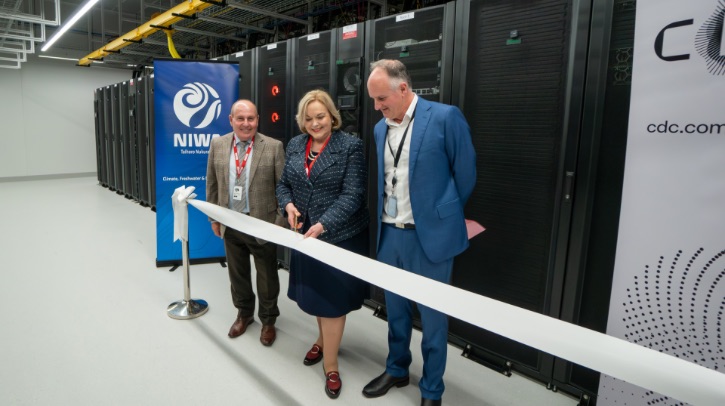
Judith Collins, minister for research, science and innovation, cuts the ribbon for NIWA's new high-performance computer at one of CDC's Auckland data centers. Credit: NIWA
Share
LinkedIn Facebook Twitter Email

NIWA (National Institute of Water and Atmospheric Research) has purchased a NZ$20m (US$12m) supercomputer to enable high-resolution weather and climate forecasting 24/7, using data from weather stations around the world.

Increased computation power

The next-generation supercomputer is the fourth that NIWA has bought since its initial investment in high-performance computing for New Zealand in 1999. The new computer will have 2.5 to three times more generational power than its predecessor, enabling higher resolution, more frequent processing and additional AI workloads. It will reportedly be housed at two state-of-the-art data centers in Auckland, with the highest security and sustainability credentials.

“As the biggest research computer in New Zealand, it represents a NZ$20m (US$21m) investment in NIWA’s world-leading climate, marine and freshwater science and advanced technologies,” said NIWA chief executive John Morgan.

“This is a substantial investment in New Zealand science that will benefit all New Zealanders and our friends throughout the Pacific Islands, especially as our nation is increasingly being disrupted by extreme weather events. It will also be used to help keep the country all safe in the outdoors through weather forecasting services for the Department of Conservation and by supporting FENZ [Fire and Emergency New Zealand] in their fire and emergency services.”

According to NIWA, the supercomputer is also capable of tailored expansion to meet the supercomputing requirements of other science institutions in New Zealand and throughout the Pacific.

Global emissions detection

The supercomputer will also support the organization’s role as the science lead in the international satellite mission (MethaneSat) to detect global methane emissions – including those from agricultural sources. In particular, NIWA plans to use the system to provide its computational resources to support the high-resolution weather models needed to show the origin of the methane even when it has been blown away from its source.

In related news, NIWA has launched a NZ$5m (US$3m) per year package of new projects aiming to tackle some of New Zealand’s most pressing challenges, including responding to and preparing for extreme weather events. Click here to read the full story.

Previous ArticleUrban heat forecasts could be enhanced with machine learning, UK Met Office says
Next Article EXCLUSIVE FEATURE: How are great frigatebirds, elephant seals and tiger sharks tracking meteorological conditions around the world?

Read Similar Stories

Aviation

Met Office launches platform to support needs of evolving aviation industry

March 24, 20262 Mins Read
Automated Weather Stations

Chongqing expands AI-powered weather services to improve warning times

March 5, 20263 Mins Read
Data

Met Office rolls out major forecasting system upgrade

February 9, 20263 Mins Read
Latest News

Northumbria University secures £4m to study Earth’s radiation belts

April 16, 2026

AI model improves real-time prediction of wildfire spread

April 16, 2026

Study identifies atmospheric trigger behind flash droughts in Puerto Rico

April 15, 2026

Receive breaking stories and features in your inbox each week, for free


Enter your email address:


Supplier Spotlights
  • ELDES S.r.l.
Getting in Touch
  • Contact Us / Advertise
  • Meet the Editors
  • Media Pack
  • Free Weekly E-Newsletter
Our Social Channels
  • Facebook
  • LinkedIn
© 2026 UKi Media & Events a division of UKIP Media & Events Ltd
  • Cookie Policy
  • Privacy Policy
  • Terms and Conditions
  • Notice and Takedown Policy

Type above and press Enter to search. Press Esc to cancel.