


Close Menu
Meteorological Technology International
  • News
    • A-E
      • Agriculture
      • Automated Weather Stations
      • Aviation
      • Climate Measurement
      • Data
      • Developing Countries
      • Digital Applications
      • Early Warning Systems
      • Extreme Weather
    • G-P
      • Hydrology
      • Lidar
      • Lightning Detection
      • New Appointments
      • Nowcasting
      • Numerical Weather Prediction
      • Polar Weather
    • R-S
      • Radar
      • Rainfall
      • Remote Sensing
      • Renewable Energy
      • Satellites
      • Solar
      • Space Weather
      • Supercomputers
    • T-Z
      • Training
      • Transport
      • Weather Instruments
      • Wind
      • World Meteorological Organization
      • Meteorological Technology World Expo
  • Features
  • Online Magazines
    • January 2026
    • April 2025
    • January 2025
    • September 2024
    • April 2024
    • Archive Issues
    • Subscribe Free!
  • Opinion
  • Videos
  • Supplier Spotlight
  • Expo
LinkedIn X (Twitter) Facebook
  • Sign-up for Free Weekly E-Newsletter
  • Meet the Editors
  • Contact Us
  • Media Pack
LinkedIn Facebook
Subscribe
Meteorological Technology International
  • News
      • Agriculture
      • Automated Weather Stations
      • Aviation
      • Climate Measurement
      • Data
      • Developing Countries
      • Digital Applications
      • Early Warning Systems
      • Extreme Weather
      • Hydrology
      • Lidar
      • Lightning Detection
      • New Appointments
      • Nowcasting
      • Numerical Weather Prediction
      • Polar Weather
      • Radar
      • Rainfall
      • Remote Sensing
      • Renewable Energy
      • Satellites
      • Solar
      • Space Weather
      • Supercomputers
      • Training
      • Transport
      • Weather Instruments
      • Wind
      • World Meteorological Organization
      • Meteorological Technology World Expo
  • Features
  • Online Magazines
    1. January 2026
    2. September 2025
    3. April 2025
    4. January 2025
    5. September 2024
    6. April 2024
    7. January 2024
    8. September 2023
    9. April 2023
    10. Archive Issues
    11. Subscribe Free!
    Featured
    November 27, 2025

    In this Issue – January 2026

    By Hazel KingNovember 27, 2025
    Recent

    In this Issue – January 2026

    November 27, 2025

    In this Issue – September 2025

    August 11, 2025

    In this Issue – April 2025

    April 15, 2025
  • Opinion
  • Videos
  • Supplier Spotlight
  • Expo
Facebook LinkedIn
Subscribe
Meteorological Technology International
Space Weather

NOAA signs agreement to improve space weather collaboration among federal agencies

Elizabeth BakerBy Elizabeth BakerDecember 13, 20233 Mins Read
Share LinkedIn Facebook Twitter Email
Share
LinkedIn Facebook Twitter Email

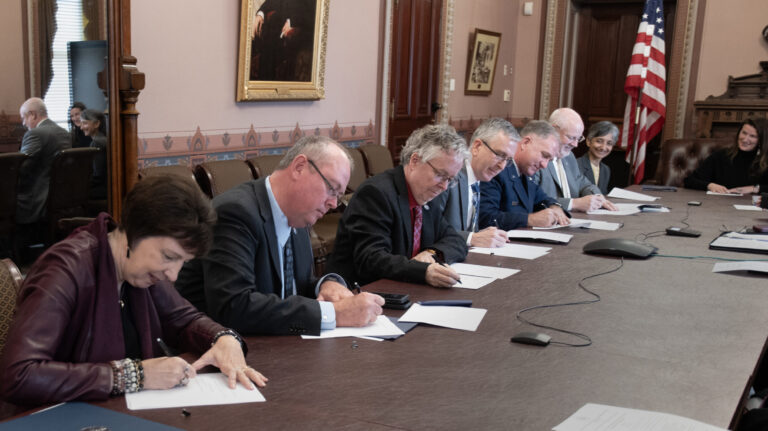
NOAA has signed a memorandum of agreement (MOA) with other federal agencies to encourage and support collaboration among agencies to advance the nation’s space weather research and operations capabilities.

The event was hosted in the Eisenhower Executive Office Building by the White House Office of Science and Technology Policy. This agreement comes at a time when we are approaching what is reportedly already proving to be an active Solar Cycle 25.

According to NOAA, the absence of a formal interagency process for the transition of space weather research-to-operations and operations-to-research has been long recognized as a critical gap in evolving the USA’s ability to improve space weather forecasts and warnings. The agreement provides a structure through which NOAA, NASA, the National Science Foundation (NSF) and the Department of the Air Force (DAF) are expected to coordinate and collaborate on space weather research-to-operations-to-research. This includes working together to transition capabilities such as models, observations, forecast applications, techniques and technology – from research into operations. It also means providing and acknowledging feedback and sharing of operational data and information on space weather impacts on infrastructure.

The need for a framework was identified by the White House Space Weather Operations, Research, and Mitigation Subcommittee. It was identified as a critical gap in the nation’s ability to improve space weather forecasts and warnings to support NOAA’s important federal space activities and the rapidly expanding commercial space economy. To close the gap, the Promoting Research and Observations of Space Weather to Improve the Forecasting of Tomorrow (PROSWIFT) Act directs federal agencies to develop formal mechanisms to transition space weather research models and capabilities to operations.

NOAA’s Office of Space Weather Observations develops and deploys advanced operational satellite systems that monitor space weather and safeguard society. The Space Weather Follow On is a NOAA environmental satellite program that collects space weather measurements to predict and minimize space weather impacts here on Earth.

NOAA’s Space Weather Prediction Center safeguards society with actionable space weather information. It is the official civilian source for space weather forecasts, watches, warnings, alerts and impacts. Its forecasts inform electric grid operators, satellite operators, airlines and others about potential impacts of space weather so they can take action to protect infrastructure and the public.

“Having this interagency agreement will lead to actions to improve space weather forecasts and predictions,” said Ken Graham, director of NOAA’s National Weather Service, who signed the MOA. “We have a shared goal and that is to enhance our nation’s space weather preparedness and that can only happen through better coordination and expanding on existing efforts to improve space weather observations, research and modeling.”

Stephen Volz, assistant administrator for NOAA’s Satellite and Information Service, commented, “Strengthening collaborations and coordination across the federal government in transitioning space weather research to operations is critical for minimizing and mitigating the potential consequences of space weather events, and for supporting the growing commercial space enterprise.”

For more key space weather updates from the meteorological technology industry, click here.

Previous ArticleVIDEO: Royal Meteorological Society highlights key steps forward at COP28
Next Article US government releases the Fifth National Climate Assessment report

Read Similar Stories

Space Weather

Northumbria University secures £4m to study Earth’s radiation belts

April 16, 20262 Mins Read
Solar

Mauna Loa Solar Observatory reopens to support Artemis II mission

April 8, 20262 Mins Read
Satellites

NCAR researchers create breakthrough tool to enhance space weather prediction

February 24, 20262 Mins Read
Latest News

Northumbria University secures £4m to study Earth’s radiation belts

April 16, 2026

AI model improves real-time prediction of wildfire spread

April 16, 2026

Study identifies atmospheric trigger behind flash droughts in Puerto Rico

April 15, 2026

Receive breaking stories and features in your inbox each week, for free


Enter your email address:


Supplier Spotlights
  • LCJ Capteurs
Getting in Touch
  • Contact Us / Advertise
  • Meet the Editors
  • Media Pack
  • Free Weekly E-Newsletter
Our Social Channels
  • Facebook
  • LinkedIn
© 2026 UKi Media & Events a division of UKIP Media & Events Ltd
  • Cookie Policy
  • Privacy Policy
  • Terms and Conditions
  • Notice and Takedown Policy

Type above and press Enter to search. Press Esc to cancel.