


Close Menu
Meteorological Technology International
  • News
    • A-E
      • Agriculture
      • Automated Weather Stations
      • Aviation
      • Climate Measurement
      • Data
      • Developing Countries
      • Digital Applications
      • Early Warning Systems
      • Extreme Weather
    • G-P
      • Hydrology
      • Lidar
      • Lightning Detection
      • New Appointments
      • Nowcasting
      • Numerical Weather Prediction
      • Polar Weather
    • R-S
      • Radar
      • Rainfall
      • Remote Sensing
      • Renewable Energy
      • Satellites
      • Solar
      • Space Weather
      • Supercomputers
    • T-Z
      • Training
      • Transport
      • Weather Instruments
      • Wind
      • World Meteorological Organization
      • Meteorological Technology World Expo
  • Features
  • Online Magazines
    • January 2026
    • April 2025
    • January 2025
    • September 2024
    • April 2024
    • Archive Issues
    • Subscribe Free!
  • Opinion
  • Videos
  • Supplier Spotlight
  • Expo
LinkedIn X (Twitter) Facebook
  • Sign-up for Free Weekly E-Newsletter
  • Meet the Editors
  • Contact Us
  • Media Pack
LinkedIn Facebook
Subscribe
Meteorological Technology International
  • News
      • Agriculture
      • Automated Weather Stations
      • Aviation
      • Climate Measurement
      • Data
      • Developing Countries
      • Digital Applications
      • Early Warning Systems
      • Extreme Weather
      • Hydrology
      • Lidar
      • Lightning Detection
      • New Appointments
      • Nowcasting
      • Numerical Weather Prediction
      • Polar Weather
      • Radar
      • Rainfall
      • Remote Sensing
      • Renewable Energy
      • Satellites
      • Solar
      • Space Weather
      • Supercomputers
      • Training
      • Transport
      • Weather Instruments
      • Wind
      • World Meteorological Organization
      • Meteorological Technology World Expo
  • Features
  • Online Magazines
    1. January 2026
    2. September 2025
    3. April 2025
    4. January 2025
    5. September 2024
    6. April 2024
    7. January 2024
    8. September 2023
    9. April 2023
    10. Archive Issues
    11. Subscribe Free!
    Featured
    November 27, 2025

    In this Issue – January 2026

    By Hazel KingNovember 27, 2025
    Recent

    In this Issue – January 2026

    November 27, 2025

    In this Issue – September 2025

    August 11, 2025

    In this Issue – April 2025

    April 15, 2025
  • Opinion
  • Videos
  • Supplier Spotlight
  • Expo
Facebook LinkedIn
Subscribe
Meteorological Technology International
Space Weather

CIRES and NOAA complete validation of GOES-18 instruments in record time

Elizabeth BakerBy Elizabeth BakerFebruary 6, 20244 Mins Read
Share LinkedIn Facebook Twitter Email
Share
LinkedIn Facebook Twitter Email

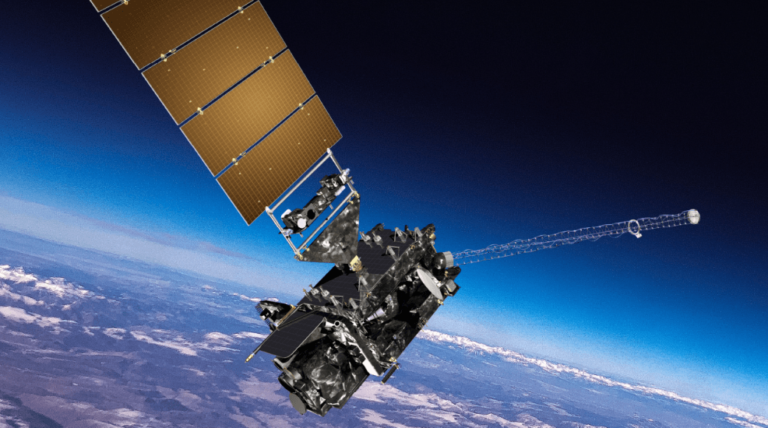
CIRES and NOAA researchers have validated the sun and space weather monitoring instruments aboard the GOES-18 satellite in less than two years.

The instruments are now at full operational maturity. Researchers finished final validations for the instruments in December 2023, enabling the instrument data to be considered fully mature just 21 months after launch.

Instruments on board GOES-R satellites monitor terrestrial and space weather, ensuring forecasters can track severe storms, map lightning strikes and monitor potentially harmful particles and radiation heading toward Earth from the sun.

“It was a huge effort for the team,” said Alessandra Abe Pacini, a heliophysics data steward who works in NOAA’s National Centers for Environmental Information (NCEI) with the team that performed the validation of the space weather instrument data. “The team did that in an unprecedented timeline.”

GOES-18 is the third satellite in the GOES-R series, the current generation of NOAA weather satellites. GOES satellites circle Earth in a geosynchronous orbit, meaning they continuously hover above one position on Earth’s surface as they orbit.

According to the team, validation means the instruments and the data have shown they can perform well in a variety of representative conditions. The process of validation involves a period of testing at the end of which instruments are considered operational and their data considered ready to use in forecasting.

The 21 months it took researchers to validate the instruments on board GOES-18 was one-third of the time for the same work on board GOES-16 (59 months) and less than half the time on GOES-17 (46 months).

“They were really fantastic in doing that in such a short time,” Pacini said of the validation team. She explained that CIRES and NOAA researchers in NCEI completed the validation of GOES-18 instruments in record time for several reasons: Because this is the third satellite in the GOES-R series, the researchers were more familiar with the instruments; they were able to apply lessons learned from the first two satellites in the series; and the team was more cohesive.

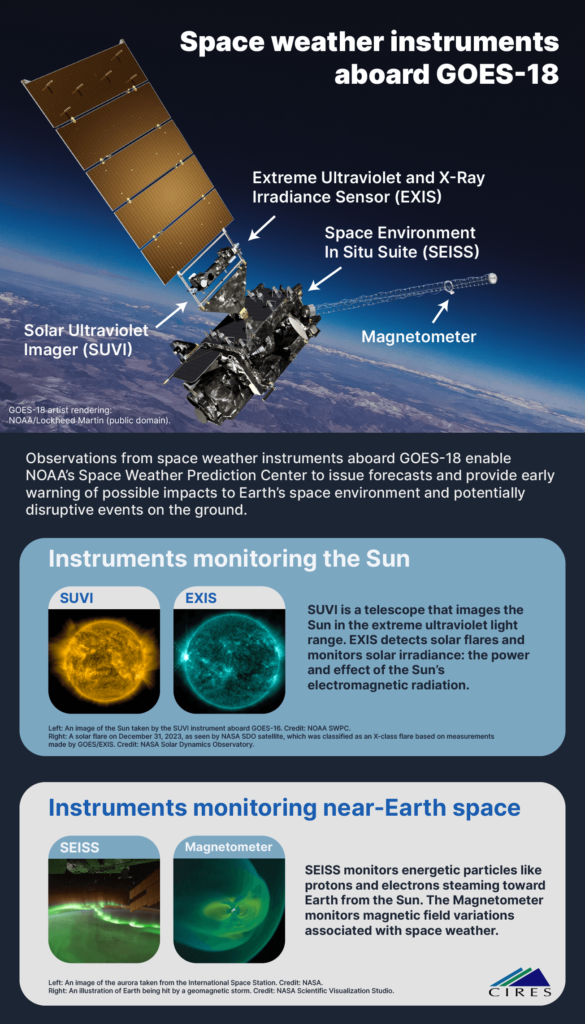
Forecasters at NOAA’s Space Weather Prediction Center (SWPC) in Boulder, Colorado, use GOES-18 data to monitor solar activity and forecast potentially disruptive geomagnetic storms. GOES-18 has six suites of instruments, four of which monitor space weather and solar activity.

Together, observations from these instruments contribute to space weather forecasts and early warning of disruptions to power utilities and communication and navigation systems as well as radiation damage to orbiting satellites.

“If we have a big solar flare, we’re going to see that in the GOES x-ray data, and that is kind of a tipoff point for forecasters to start looking at the other things like particles,” said Kim Moreland, a CIRES researcher in SWPC who uses GOES data to improve space weather forecast models. “That’s something they use every day.”

In the GOES-R series, GOES-18 serves as GOES-West and orbits over the western contiguous United States, Alaska, Hawaii, Mexico, Central America and the Pacific Ocean, monitoring weather systems and hazards that most affect this region of the western hemisphere. GOES-18 works in tandem with GOES-16, which serves as GOES-East, to cover more than half the globe, from the west coast of Africa to New Zealand. GOES-17 is in orbit as a backup satellite.

Together, GOES-East and GOES-West enable forecasters to provide warnings of space weather hazards responsible for communications and navigation disruptions and power blackouts. They also monitor energetic particles from the sun that can cause radiation hazards to satellites and astronauts aboard the International Space Station.

The NCEI space weather team is now getting ready for the next satellite in the series, GOES-U, which is scheduled for launch at the end of April 2024. GOES-U will have a coronagraph added to its suite of space weather instruments, giving researchers and space weather operators a new view of the sun’s corona.
Read more of the latest solar updates from the meteorological technology industry here, and click here for more on space weather

Previous ArticleFinnish Meteorological Institute reveals snow reflectivity model to enhance satellite measurements of carbon dioxide in the Arctic
Next Article Scripps Institution of Oceanography reviews 20 years of NASA’s laser-based satellite observations

Read Similar Stories

Space Weather

Northumbria University secures £4m to study Earth’s radiation belts

April 16, 20262 Mins Read
Extreme Weather

AI model improves real-time prediction of wildfire spread

April 16, 20263 Mins Read
Satellites

AI tool uses weather satellite data to map ocean currents in near real time

April 14, 20263 Mins Read
Latest News

Northumbria University secures £4m to study Earth’s radiation belts

April 16, 2026

AI model improves real-time prediction of wildfire spread

April 16, 2026

Study identifies atmospheric trigger behind flash droughts in Puerto Rico

April 15, 2026

Receive breaking stories and features in your inbox each week, for free


Enter your email address:


Supplier Spotlights
  • Raymetrics
Getting in Touch
  • Contact Us / Advertise
  • Meet the Editors
  • Media Pack
  • Free Weekly E-Newsletter
Our Social Channels
  • Facebook
  • LinkedIn
© 2026 UKi Media & Events a division of UKIP Media & Events Ltd
  • Cookie Policy
  • Privacy Policy
  • Terms and Conditions
  • Notice and Takedown Policy

Type above and press Enter to search. Press Esc to cancel.