


Close Menu
Meteorological Technology International
  • News
    • A-E
      • Agriculture
      • Automated Weather Stations
      • Aviation
      • Climate Measurement
      • Data
      • Developing Countries
      • Digital Applications
      • Early Warning Systems
      • Extreme Weather
    • G-P
      • Hydrology
      • Lidar
      • Lightning Detection
      • New Appointments
      • Nowcasting
      • Numerical Weather Prediction
      • Polar Weather
    • R-S
      • Radar
      • Rainfall
      • Remote Sensing
      • Renewable Energy
      • Satellites
      • Solar
      • Space Weather
      • Supercomputers
    • T-Z
      • Training
      • Transport
      • Weather Instruments
      • Wind
      • World Meteorological Organization
      • Meteorological Technology World Expo
  • Features
  • Online Magazines
    • January 2026
    • April 2025
    • January 2025
    • September 2024
    • April 2024
    • Archive Issues
    • Subscribe Free!
  • Opinion
  • Videos
  • Supplier Spotlight
  • Expo
LinkedIn X (Twitter) Facebook
  • Sign-up for Free Weekly E-Newsletter
  • Meet the Editors
  • Contact Us
  • Media Pack
LinkedIn Facebook
Subscribe
Meteorological Technology International
  • News
      • Agriculture
      • Automated Weather Stations
      • Aviation
      • Climate Measurement
      • Data
      • Developing Countries
      • Digital Applications
      • Early Warning Systems
      • Extreme Weather
      • Hydrology
      • Lidar
      • Lightning Detection
      • New Appointments
      • Nowcasting
      • Numerical Weather Prediction
      • Polar Weather
      • Radar
      • Rainfall
      • Remote Sensing
      • Renewable Energy
      • Satellites
      • Solar
      • Space Weather
      • Supercomputers
      • Training
      • Transport
      • Weather Instruments
      • Wind
      • World Meteorological Organization
      • Meteorological Technology World Expo
  • Features
  • Online Magazines
    1. January 2026
    2. September 2025
    3. April 2025
    4. January 2025
    5. September 2024
    6. April 2024
    7. January 2024
    8. September 2023
    9. April 2023
    10. Archive Issues
    11. Subscribe Free!
    Featured
    November 27, 2025

    In this Issue – January 2026

    By Hazel KingNovember 27, 2025
    Recent

    In this Issue – January 2026

    November 27, 2025

    In this Issue – September 2025

    August 11, 2025

    In this Issue – April 2025

    April 15, 2025
  • Opinion
  • Videos
  • Supplier Spotlight
  • Expo
Facebook LinkedIn
Subscribe
Meteorological Technology International
Satellites

Finnish Meteorological Institute reveals snow reflectivity model to enhance satellite measurements of carbon dioxide in the Arctic

Elizabeth BakerBy Elizabeth BakerFebruary 5, 20243 Mins Read
Share LinkedIn Facebook Twitter Email
Share
LinkedIn Facebook Twitter Email

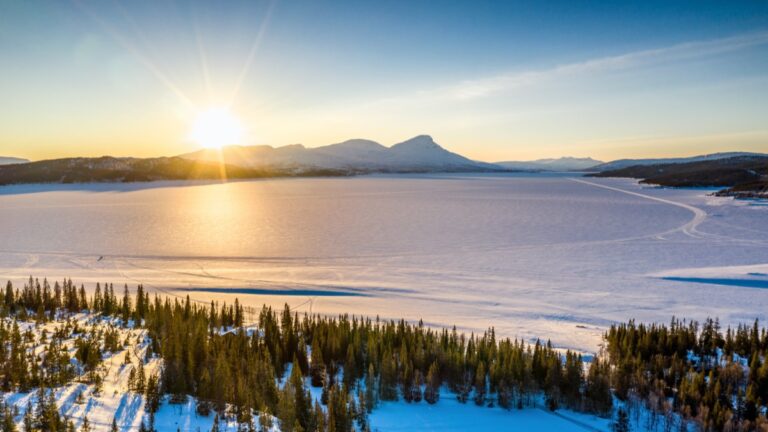
Radiative transfer simulations at the Finnish Meteorological Institute (FMI) are expected to improve satellite remote sensing of carbon dioxide and therefore advance the study of the carbon cycle in the Arctic regions. The simulations support the planning of the European CO2M satellite mission.

Doctoral researcher Antti Mikkonen at the Finnish Meteorological Institute devised a mathematical description of snow surface reflectance in the infrared region based on snow reflectivity measurements carried out by Jouni Peltoniemi from the Finnish Geospatial Research Institute. As part of this research, Mikkonen developed a new simulation model for atmospheric infrared radiation that also accounts for polarization. Infrared radiation, like other kinds of electromagnetic radiation, propagates in the form of waves; the perpendicular direction of this wave motion is called polarization.

“Many previous simulators do not consider polarization, and in that case you lose part of the information in the satellite observations,” Mikkonen explained.

“When analyzing the simulated satellite observations we found that by viewing the reflected solar image on the snow surface, the satellite can receive up to five times greater signal compared with the traditional observation mode, where the satellite is viewing directly downward from the orbit. This finding enables the re-examination of existing observations of NASA’s OCO-2 satellite and supports the preparations of the European greenhouse gas monitoring satellite mission CO2M.

According to the FMI, climate change warms the Arctic region four times more quickly than the rest of the world. Therefore, the organization found it particularly important to observe the sources and sinks of greenhouse gases and their feedback loops in the Arctic. Satellite observations are an efficient way to carry out repeated and comprehensive measurements all over the world. They are expected to be specifically useful in locations where capabilities for other kinds of measurements are limited. To understand the carbon cycle, observations throughout the year are found to be important.

Observing carbon dioxide from satellites is based on measuring infrared radiation, which originates from the sun and is reflected off the surface of Earth. To attain an adequate infrared signal, the surface of Earth needs to be reflective enough. Unlike in the visible region, where snow is extremely bright and reflects almost all of the incidental light, in the infrared region snow is very dark, which complicates the observations considerably.

The European Space Agency and the Academy of Finland funded this research, which is linked to the Academy of Finland’s Centre of Excellence in Inverse Modeling as well as the FAME and ACCC Flagships.

Read more of the latest satellite updates from the meteorological technology industry, here.

Previous ArticleWMO meets the UN to strengthen partnerships
Next Article CIRES and NOAA complete validation of GOES-18 instruments in record time

Read Similar Stories

Space Weather

Northumbria University secures £4m to study Earth’s radiation belts

April 16, 20262 Mins Read
Extreme Weather

AI model improves real-time prediction of wildfire spread

April 16, 20263 Mins Read
Satellites

AI tool uses weather satellite data to map ocean currents in near real time

April 14, 20263 Mins Read
Latest News

Northumbria University secures £4m to study Earth’s radiation belts

April 16, 2026

AI model improves real-time prediction of wildfire spread

April 16, 2026

Study identifies atmospheric trigger behind flash droughts in Puerto Rico

April 15, 2026

Receive breaking stories and features in your inbox each week, for free


Enter your email address:


Supplier Spotlights
  • Nel Hydrogen
Getting in Touch
  • Contact Us / Advertise
  • Meet the Editors
  • Media Pack
  • Free Weekly E-Newsletter
Our Social Channels
  • Facebook
  • LinkedIn
© 2026 UKi Media & Events a division of UKIP Media & Events Ltd
  • Cookie Policy
  • Privacy Policy
  • Terms and Conditions
  • Notice and Takedown Policy

Type above and press Enter to search. Press Esc to cancel.