


Close Menu
Meteorological Technology International
  • News
    • A-E
      • Agriculture
      • Automated Weather Stations
      • Aviation
      • Climate Measurement
      • Data
      • Developing Countries
      • Digital Applications
      • Early Warning Systems
      • Extreme Weather
    • G-P
      • Hydrology
      • Lidar
      • Lightning Detection
      • New Appointments
      • Nowcasting
      • Numerical Weather Prediction
      • Polar Weather
    • R-S
      • Radar
      • Rainfall
      • Remote Sensing
      • Renewable Energy
      • Satellites
      • Solar
      • Space Weather
      • Supercomputers
    • T-Z
      • Training
      • Transport
      • Weather Instruments
      • Wind
      • World Meteorological Organization
      • Meteorological Technology World Expo
  • Features
  • Online Magazines
    • January 2026
    • April 2025
    • January 2025
    • September 2024
    • April 2024
    • Archive Issues
    • Subscribe Free!
  • Opinion
  • Videos
  • Supplier Spotlight
  • Expo
LinkedIn X (Twitter) Facebook
  • Sign-up for Free Weekly E-Newsletter
  • Meet the Editors
  • Contact Us
  • Media Pack
LinkedIn Facebook
Subscribe
Meteorological Technology International
  • News
      • Agriculture
      • Automated Weather Stations
      • Aviation
      • Climate Measurement
      • Data
      • Developing Countries
      • Digital Applications
      • Early Warning Systems
      • Extreme Weather
      • Hydrology
      • Lidar
      • Lightning Detection
      • New Appointments
      • Nowcasting
      • Numerical Weather Prediction
      • Polar Weather
      • Radar
      • Rainfall
      • Remote Sensing
      • Renewable Energy
      • Satellites
      • Solar
      • Space Weather
      • Supercomputers
      • Training
      • Transport
      • Weather Instruments
      • Wind
      • World Meteorological Organization
      • Meteorological Technology World Expo
  • Features
  • Online Magazines
    1. January 2026
    2. September 2025
    3. April 2025
    4. January 2025
    5. September 2024
    6. April 2024
    7. January 2024
    8. September 2023
    9. April 2023
    10. Archive Issues
    11. Subscribe Free!
    Featured
    November 27, 2025

    In this Issue – January 2026

    By Hazel KingNovember 27, 2025
    Recent

    In this Issue – January 2026

    November 27, 2025

    In this Issue – September 2025

    August 11, 2025

    In this Issue – April 2025

    April 15, 2025
  • Opinion
  • Videos
  • Supplier Spotlight
  • Expo
Facebook LinkedIn
Subscribe
Meteorological Technology International
Data

US National Science Foundation renews funding for internet-connected ocean observatory

Elizabeth BakerBy Elizabeth BakerOctober 19, 20234 Mins Read
Share LinkedIn Facebook Twitter Email
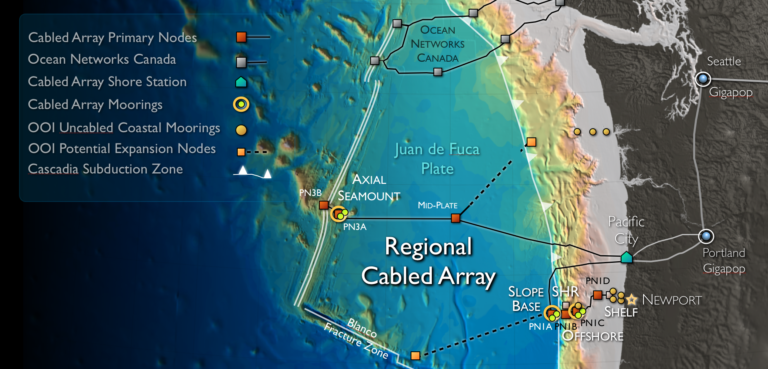
Map showing the Juan de Fuca tectonic plate and the University of Washington-operated regional cabled array (red squares). A cable along the seafloor brings power and internet connectivity to instruments that since 2014 have provided continuous observations of the ocean and seafloor.
Share
LinkedIn Facebook Twitter Email

The US National Science Foundation (NSF) will award US$220m and a new five-year cooperative agreement to the coalition of academic and oceanographic research organizations operating and maintaining the Ocean Observatories Initiative (OOI).

The University of Washington, Oregon State University and project lead Woods Hole Oceanographic Institution will continue operating the OOI, a science-driven ocean observing network that delivers real-time data from more than 900 instruments to address scientific questions regarding the world’s oceans. The coalition was previously funded in 2018.

Under this US$220m total investment, each of the three institutions will continue to operate and maintain the portion of the observatory for which it is currently responsible. The award amount for the UW is US$52.4m.

“I am extremely excited about these next five years of operations and the continued opportunities that the regional cabled array will provide for unparalleled environmental data throughout entire ocean depths in some of the most dynamic environments on Earth,” said Deborah Kelley, a University of Washington professor of oceanography and director of the Regional Cabled Array.

“Decade-long measurements from more than 150 instruments sampling every second make this a perfect system to captivate users with ‘new eyes’ and AI applications, which will undoubtedly lead to important new discoveries and predictive capabilities.”

The University of Washington operates what’s now known as the regional cabled array, an underwater observatory on the seafloor of the Juan de Fuca tectonic plate – a small tectonic plate off Newport, Oregon, that’s home to an active underwater volcano and deep-ocean life – at one to almost two miles depth. The array also has instruments that move up and down to monitor properties in the ocean above. More than 500 miles (900km) of submarine fiber-optic cable provide power, real-time data transmission and live, two-way communication between the observatory and computers back on shore.

The regional cabled array is the largest component of the full OOI network that collects and shares measurements from more than 900 instruments on the seafloor and on moored and free-swimming robotic platforms. The instruments are maintained with regular, ship-based expeditions to the equipment sites. All data is freely available to users worldwide, including members of the scientific community, policy experts, decision-makers, educators and the public.

“We’re so pleased to have the opportunity to continue providing streaming, real-time ocean data for all to use as part of the OOI,” said Maya Tolstoy, the Maggie Walker dean of the University of Washington College of the Environment. “This support will allow the global research community to conduct multi-faceted, cutting-edge science for years to come, which is vital to understanding and protecting our oceans.”

Oregon State University will continue to operate the endurance array in the coastal waters near Oregon. Woods Hole Oceanographic Institution, which is based in Massachusetts, will operate projects outside the Pacific Northwest region, including the pioneer array off the North Carolina coast, subject to environmental permitting, and two global arrays, off the southern tip of Greenland and at a long-term ocean observing station in the Gulf of Alaska.

“OOI has proven to be an exceedingly valuable source of information about the ocean. Its freely available data are contributing to a better understanding of ocean processes and how the ocean is changing,” said George Voulgaris, program officer for OOI at NSF. “Scientists are using OOI data as the source of cutting-edge scientific discoveries – everything from getting close to predicting underwater volcanic eruptions to changing ocean circulation patterns that have real-life implications for weather and fishing patterns. OOI data also are serving as inspiration for students in the classroom, who are excited about learning about the ocean with access to real-time ocean data. We at NSF are proud of our continued investment in making these data available.”

Woods Hole Oceanographic Institution will continue to lead operations and management of OOI through 2028, and OSU will continue to house and operate the data center that ingests and delivers all OOI data.

Read more of the latest hydrology updates from the meteorological technology industry, here.
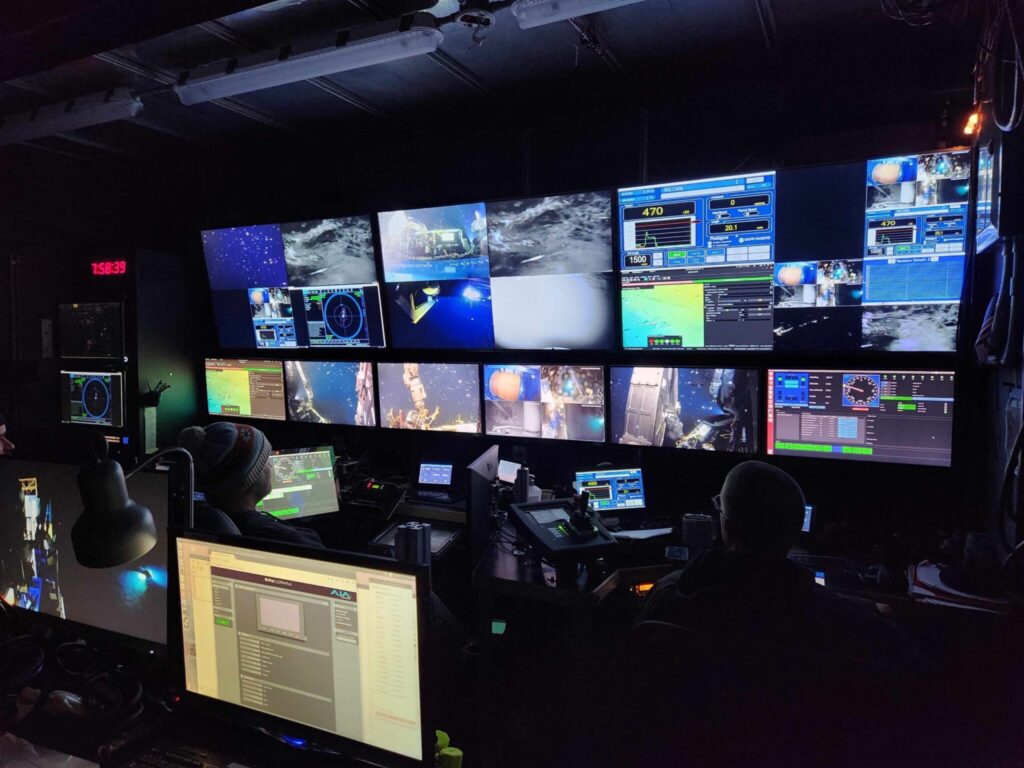
The R/V Thomas G Thompson’s control room during the 2023 maintenance cruise. Screens show engineers different views of the remotely operated vehicle, or ROV, that visits deep-ocean sites to repair or swap out instruments.
Credit: Mitch Elend/University of Washington
Previous ArticleNatural Environment Research Council funds research project into AI use in storm nowcasting for Africa
Next Article Biden-Harris Administration invests US$26m to improve NOAA drought and flood forecasts

Read Similar Stories

Satellites

AI tool uses weather satellite data to map ocean currents in near real time

April 14, 20263 Mins Read
Climate Measurement

New tool speeds up climate model evaluation

April 13, 20262 Mins Read
Climate Measurement

China inaugurates 27th national climate observatory in Hebei

April 9, 20262 Mins Read
Latest News

Northumbria University secures £4m to study Earth’s radiation belts

April 16, 2026

AI model improves real-time prediction of wildfire spread

April 16, 2026

Study identifies atmospheric trigger behind flash droughts in Puerto Rico

April 15, 2026

Receive breaking stories and features in your inbox each week, for free


Enter your email address:


Supplier Spotlights
  • Synoptic Data PBC
Getting in Touch
  • Contact Us / Advertise
  • Meet the Editors
  • Media Pack
  • Free Weekly E-Newsletter
Our Social Channels
  • Facebook
  • LinkedIn
© 2026 UKi Media & Events a division of UKIP Media & Events Ltd
  • Cookie Policy
  • Privacy Policy
  • Terms and Conditions
  • Notice and Takedown Policy

Type above and press Enter to search. Press Esc to cancel.