


Close Menu
Meteorological Technology International
  • News
    • A-E
      • Agriculture
      • Automated Weather Stations
      • Aviation
      • Climate Measurement
      • Data
      • Developing Countries
      • Digital Applications
      • Early Warning Systems
      • Extreme Weather
    • G-P
      • Hydrology
      • Lidar
      • Lightning Detection
      • New Appointments
      • Nowcasting
      • Numerical Weather Prediction
      • Polar Weather
    • R-S
      • Radar
      • Rainfall
      • Remote Sensing
      • Renewable Energy
      • Satellites
      • Solar
      • Space Weather
      • Supercomputers
    • T-Z
      • Training
      • Transport
      • Weather Instruments
      • Wind
      • World Meteorological Organization
      • Meteorological Technology World Expo
  • Features
  • Online Magazines
    • January 2026
    • April 2025
    • January 2025
    • September 2024
    • April 2024
    • Archive Issues
    • Subscribe Free!
  • Opinion
  • Videos
  • Supplier Spotlight
  • Expo
LinkedIn X (Twitter) Facebook
  • Sign-up for Free Weekly E-Newsletter
  • Meet the Editors
  • Contact Us
  • Media Pack
LinkedIn Facebook
Subscribe
Meteorological Technology International
  • News
      • Agriculture
      • Automated Weather Stations
      • Aviation
      • Climate Measurement
      • Data
      • Developing Countries
      • Digital Applications
      • Early Warning Systems
      • Extreme Weather
      • Hydrology
      • Lidar
      • Lightning Detection
      • New Appointments
      • Nowcasting
      • Numerical Weather Prediction
      • Polar Weather
      • Radar
      • Rainfall
      • Remote Sensing
      • Renewable Energy
      • Satellites
      • Solar
      • Space Weather
      • Supercomputers
      • Training
      • Transport
      • Weather Instruments
      • Wind
      • World Meteorological Organization
      • Meteorological Technology World Expo
  • Features
  • Online Magazines
    1. January 2026
    2. September 2025
    3. April 2025
    4. January 2025
    5. September 2024
    6. April 2024
    7. January 2024
    8. September 2023
    9. April 2023
    10. Archive Issues
    11. Subscribe Free!
    Featured
    November 27, 2025

    In this Issue – January 2026

    By Hazel KingNovember 27, 2025
    Recent

    In this Issue – January 2026

    November 27, 2025

    In this Issue – September 2025

    August 11, 2025

    In this Issue – April 2025

    April 15, 2025
  • Opinion
  • Videos
  • Supplier Spotlight
  • Expo
Facebook LinkedIn
Subscribe
Meteorological Technology International
World Meteorological Organization

WMO experts discuss action on water and early warnings

Elizabeth BakerBy Elizabeth BakerJanuary 24, 20244 Mins Read
Share LinkedIn Facebook Twitter Email
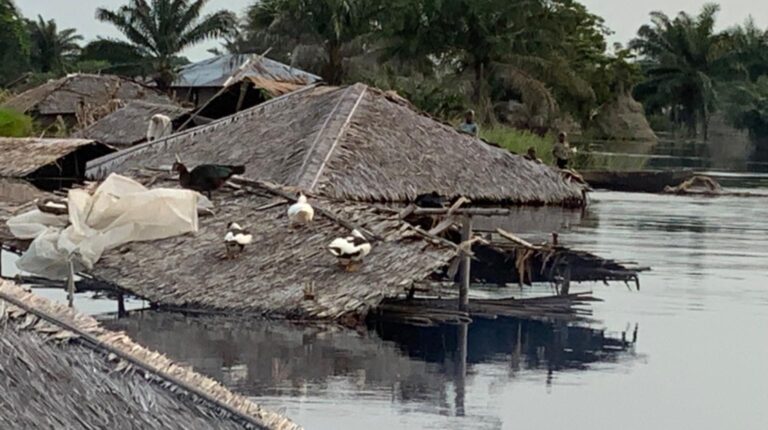
Photo credit: Bienvenue Dinga and Congo National Hydrological Service
Share
LinkedIn Facebook Twitter Email

In the face of a series of flooding disasters in January 2024, a team of early warning services experts have met at the WMO to try to accelerate action on the Early Warnings For All initiative.

According to the WMO, only half of the world’s countries have early warning systems in place, with coverage particularly low in small island developing states (SIDS), least developed countries (LDCs) and Africa.

The Early Warnings For All drive, spearheaded by UN secretary-general António Guterres, aims to ensure that everyone is covered by early warning systems by the end of 2027. According to WMO’s State of the Global Water Resources report, many of the 30 countries targeted for priority action in Early Warnings for All suffered major floods or droughts in 2022. It also found that not a single one of these countries had timely and accurate hydrological data available to support evidence-based decision making and early action. Mauritius – one of the 30 focus countries – was hit by devastating tropical cyclone-related flooding on January 15 this year.

Ordinarily, the WMO Hydrological Status and Outlook System (HydroSOS), which is currently under technical development and regional implementation, seeks to meet this challenge. The World Hydrological Cycle Observing System, the WMO Information System and the WMO Integrated Processing and Prediction System also provide support.

All these WMO activities fall under the responsibility of the Hydrological Coordination Panel, the WMO think-tank on hydrology. The panel integrates the hydrological work of WMO into the wider global water agenda and works to promote WMO’s long-term ambitions on water. These are: no one is surprised by a flood; everyone is prepared for drought; hydroclimate and meteorological data supports the food security agenda; high-quality data supports science; science provides a sound basis for operational hydrology; we have a thorough knowledge of the water resources of our world; sustainable development is supported by hydrological information; and water quality is known.

The team found that the Congo Basin is suffering its worst flooding in nearly six decades. Extreme rainfall since October 2023 burst the banks around the Ubangi River – one of the three major rivers feeding into the Congo Basin. A flood emergency was officially declared by the government on December 29.

The Office for the Coordination of Humanitarian Affairs said on January 19, 2024, that more than 350,000 people need humanitarian assistance in Congo, where nine out of the country’s 12 departments remain under water. Many villages can only be reached by boat or canoe and huge swathes of productive agricultural land are flooded. The situation is equally dire in parts of the Democratic Republic of the Congo.

Dr Jean Bienvenue Dinga, director of the National Hydrological Service of Congo, said, “It is the most exceptional event since the catastrophic floods of December 1961.” In the 1961 floods, there was a measured discharge of 80,000m3 per second into the Congo Basin. By comparison, on January 9, it was 75,000m3 per second. The heavy rains, which are typical of El Niño impacts, were predicted in the seasonal forecast for October-November-December. However, Dr Dinga, who attended a Hydrological Coordination Panel meeting in Geneva, pointed out that the lack of resources and equipment hampered efforts to save livelihoods and lives. “We want to strengthen early warning systems in line with the Early Warnings for All initiative. But the problem is lack of funding. If we had funding, it would be different,” he said.

In 1995 there were 80 hydrological monitoring stations in Congo. Now there are just 13, due to lack of funding. Many other countries are suffering a decline in the hydrological monitoring network and a reduction in available observational data.

Therefore, the separate team has begun attempting to advance the Early Warnings for All initiative as well as action to improve water resource management and reduce water-related hazards.

For more key World Meteorological Organization updates, click here.

Previous ArticleFEATURE: How NASA’s Tropospheric Emissions: Monitoring of Pollution mission is set to provide hyperlocal air pollutant monitoring at never-seen-before spatial resolutions
Next Article ECMWF returns to Mode-S aircraft observations to improve forecasts

Read Similar Stories

Climate Measurement

Regional training aims to improve flood forecasting in Central Africa

April 1, 20263 Mins Read
Climate Measurement

Global climate indicators reach record imbalance, WMO warns

March 23, 20263 Mins Read
Extreme Weather

WMO retires Hurricane Melissa name after deadly 2025 storm

March 13, 20263 Mins Read
Latest News

Northumbria University secures £4m to study Earth’s radiation belts

April 16, 2026

AI model improves real-time prediction of wildfire spread

April 16, 2026

Study identifies atmospheric trigger behind flash droughts in Puerto Rico

April 15, 2026

Receive breaking stories and features in your inbox each week, for free


Enter your email address:


Supplier Spotlights
  • Senseca
Getting in Touch
  • Contact Us / Advertise
  • Meet the Editors
  • Media Pack
  • Free Weekly E-Newsletter
Our Social Channels
  • Facebook
  • LinkedIn
© 2026 UKi Media & Events a division of UKIP Media & Events Ltd
  • Cookie Policy
  • Privacy Policy
  • Terms and Conditions
  • Notice and Takedown Policy

Type above and press Enter to search. Press Esc to cancel.