


Close Menu
Meteorological Technology International
  • News
    • A-E
      • Agriculture
      • Automated Weather Stations
      • Aviation
      • Climate Measurement
      • Data
      • Developing Countries
      • Digital Applications
      • Early Warning Systems
      • Extreme Weather
    • G-P
      • Hydrology
      • Lidar
      • Lightning Detection
      • New Appointments
      • Nowcasting
      • Numerical Weather Prediction
      • Polar Weather
    • R-S
      • Radar
      • Rainfall
      • Remote Sensing
      • Renewable Energy
      • Satellites
      • Solar
      • Space Weather
      • Supercomputers
    • T-Z
      • Training
      • Transport
      • Weather Instruments
      • Wind
      • World Meteorological Organization
      • Meteorological Technology World Expo
  • Features
  • Online Magazines
    • January 2026
    • April 2025
    • January 2025
    • September 2024
    • April 2024
    • Archive Issues
    • Subscribe Free!
  • Opinion
  • Videos
  • Supplier Spotlight
  • Expo
LinkedIn X (Twitter) Facebook
  • Sign-up for Free Weekly E-Newsletter
  • Meet the Editors
  • Contact Us
  • Media Pack
LinkedIn Facebook
Subscribe
Meteorological Technology International
  • News
      • Agriculture
      • Automated Weather Stations
      • Aviation
      • Climate Measurement
      • Data
      • Developing Countries
      • Digital Applications
      • Early Warning Systems
      • Extreme Weather
      • Hydrology
      • Lidar
      • Lightning Detection
      • New Appointments
      • Nowcasting
      • Numerical Weather Prediction
      • Polar Weather
      • Radar
      • Rainfall
      • Remote Sensing
      • Renewable Energy
      • Satellites
      • Solar
      • Space Weather
      • Supercomputers
      • Training
      • Transport
      • Weather Instruments
      • Wind
      • World Meteorological Organization
      • Meteorological Technology World Expo
  • Features
  • Online Magazines
    1. January 2026
    2. September 2025
    3. April 2025
    4. January 2025
    5. September 2024
    6. April 2024
    7. January 2024
    8. September 2023
    9. April 2023
    10. Archive Issues
    11. Subscribe Free!
    Featured
    November 27, 2025

    In this Issue – January 2026

    By Hazel KingNovember 27, 2025
    Recent

    In this Issue – January 2026

    November 27, 2025

    In this Issue – September 2025

    August 11, 2025

    In this Issue – April 2025

    April 15, 2025
  • Opinion
  • Videos
  • Supplier Spotlight
  • Expo
Facebook LinkedIn
Subscribe
Meteorological Technology International
Satellites

Tomorrow.io wins AFLCMC contract to build on existing weather data satellite constellation

Hazel KingBy Hazel KingJuly 19, 20243 Mins Read
Share LinkedIn Facebook Twitter Email
Credit: Tomorrow.io
Share
LinkedIn Facebook Twitter Email

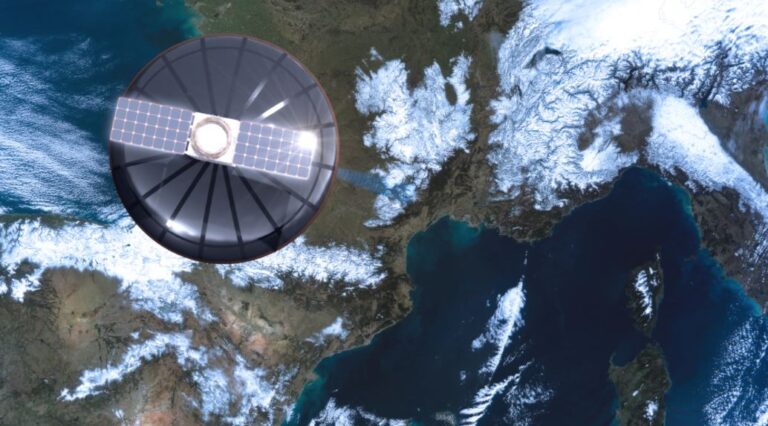
The Air Force Life Cycle Management Center (ALFCMC) weather systems branch at Hanscom Air Force Base has awarded Tomorrow.io with a contract to build on a weather data constellation in orbit.

The US$10.2m contract will see Tomorrow.io manufacture, build and deliver two additional microwave satellites to orbit, where they will provide a cumulative 10 months of data across all on-orbit microwave sounder satellites.

Funded through the Accelerate the Procurement and Fielding of Innovative Technologies program, the contract supports the development and launch of the two microwave sounder satellites. The final constellation will consist of 18 microwave sounders and 12 microwave radar satellites.

“The two additional microwave sounder satellites will increase revisit rates, or the time between observations of the same point on the Earth,” said Lauren Craft Tarter, meteorology subject matter expert for the Commercial Weather Data Pilot (CWDP). “Tomorrow.io’s future constellation of 30 low earth orbit small satellites will have hourly revisit rates.”

Traditionally, the Department of Defense (DOD) has collected its own weather data. However, this contract allows a commercial entity to collect the data, which the DOD can then purchase as a service – an approach that could be more efficient according to Major Coy Fischer, CWDP program manager.

“We are now seeing commercial efforts in space that are as good as and, in some cases, better than the public sector,” Fischer added. “With this construct, we would just pay for the service, and they (commercial entities) assume the risk of operating and maintaining the constellation.”

The CWDP initiative aims to compare commercial data with current DOD capabilities, validating the theoretical baseline for revisit rates and overall data accuracy and quality. The cost benefits of utilizing commercial companies for space domain access were quickly recognized, leading to a significant increase in such activities over recent years.

“Congress tasked the government to look at commercial sources of weather data,” Fischer continued. “Along that vein, we sought out small businesses such as Tomorrow.io, who are employing innovative techniques and technologies often much quicker than we are able to maintain on the government side.”

This follows a similar contract awarded to Tomorrow.io in 2021, when Team Hanscom awarded US$19.3m to support a constellation of high-tech weather satellites capable of observing precipitation and storm structures from space.

“This contract is more data-focused while the last contract was more focused on finalizing and optimizing the design of these satellites,” Fischer explained. “They work hand-in-hand and have a similar focus.”

Previous ArticleJuvare and Baron Weather partner on technology integration
Next Article Geo Jobe partners with Baron Weather on critical weather insights

Read Similar Stories

Space Weather

Northumbria University secures £4m to study Earth’s radiation belts

April 16, 20262 Mins Read
Extreme Weather

AI model improves real-time prediction of wildfire spread

April 16, 20263 Mins Read
Satellites

AI tool uses weather satellite data to map ocean currents in near real time

April 14, 20263 Mins Read
Latest News

Northumbria University secures £4m to study Earth’s radiation belts

April 16, 2026

AI model improves real-time prediction of wildfire spread

April 16, 2026

Study identifies atmospheric trigger behind flash droughts in Puerto Rico

April 15, 2026

Receive breaking stories and features in your inbox each week, for free


Enter your email address:


Supplier Spotlights
  • ZOGLAB Microsystem Co., Ltd
Getting in Touch
  • Contact Us / Advertise
  • Meet the Editors
  • Media Pack
  • Free Weekly E-Newsletter
Our Social Channels
  • Facebook
  • LinkedIn
© 2026 UKi Media & Events a division of UKIP Media & Events Ltd
  • Cookie Policy
  • Privacy Policy
  • Terms and Conditions
  • Notice and Takedown Policy

Type above and press Enter to search. Press Esc to cancel.