


Close Menu
Meteorological Technology International
  • News
    • A-E
      • Agriculture
      • Automated Weather Stations
      • Aviation
      • Climate Measurement
      • Data
      • Developing Countries
      • Digital Applications
      • Early Warning Systems
      • Extreme Weather
    • G-P
      • Hydrology
      • Lidar
      • Lightning Detection
      • New Appointments
      • Nowcasting
      • Numerical Weather Prediction
      • Polar Weather
    • R-S
      • Radar
      • Rainfall
      • Remote Sensing
      • Renewable Energy
      • Satellites
      • Solar
      • Space Weather
      • Supercomputers
    • T-Z
      • Training
      • Transport
      • Weather Instruments
      • Wind
      • World Meteorological Organization
      • Meteorological Technology World Expo
  • Features
  • Online Magazines
    • January 2026
    • April 2025
    • January 2025
    • September 2024
    • April 2024
    • Archive Issues
    • Subscribe Free!
  • Opinion
  • Videos
  • Supplier Spotlight
  • Expo
LinkedIn X (Twitter) Facebook
  • Sign-up for Free Weekly E-Newsletter
  • Meet the Editors
  • Contact Us
  • Media Pack
LinkedIn Facebook
Subscribe
Meteorological Technology International
  • News
      • Agriculture
      • Automated Weather Stations
      • Aviation
      • Climate Measurement
      • Data
      • Developing Countries
      • Digital Applications
      • Early Warning Systems
      • Extreme Weather
      • Hydrology
      • Lidar
      • Lightning Detection
      • New Appointments
      • Nowcasting
      • Numerical Weather Prediction
      • Polar Weather
      • Radar
      • Rainfall
      • Remote Sensing
      • Renewable Energy
      • Satellites
      • Solar
      • Space Weather
      • Supercomputers
      • Training
      • Transport
      • Weather Instruments
      • Wind
      • World Meteorological Organization
      • Meteorological Technology World Expo
  • Features
  • Online Magazines
    1. January 2026
    2. September 2025
    3. April 2025
    4. January 2025
    5. September 2024
    6. April 2024
    7. January 2024
    8. September 2023
    9. April 2023
    10. Archive Issues
    11. Subscribe Free!
    Featured
    November 27, 2025

    In this Issue – January 2026

    By Hazel KingNovember 27, 2025
    Recent

    In this Issue – January 2026

    November 27, 2025

    In this Issue – September 2025

    August 11, 2025

    In this Issue – April 2025

    April 15, 2025
  • Opinion
  • Videos
  • Supplier Spotlight
  • Expo
Facebook LinkedIn
Subscribe
Meteorological Technology International
Satellites

China Meteorological Administration accepts data from commercial meteorological small satellites for first time

Hazel KingBy Hazel KingJanuary 8, 20253 Mins Read
Share LinkedIn Facebook Twitter Email
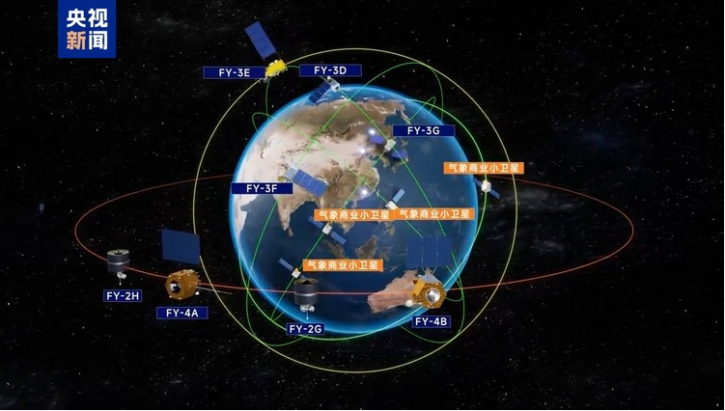
China accepts data from commercial meteorological small satellites for first time
Source: China Meteorological Administration
Share
LinkedIn Facebook Twitter Email

The China Meteorological Administration (CMA) has enabled commercial meteorological small satellites to begin operating in its integrated meteorological observing system for the first time.

On December 30, 2024, 23 satellites of the Tianmu-1 constellation and 12 satellites of the Yunyao-1 series entered the CMA’s operational system, providing powerful support for China’s meteorological forecasting and prediction.

At present, the Tianmu-1 constellation provides about 30,000 occultation profile products to CMA on a daily basis, while the Yunyao-1 series of satellites provide about 15,000 occultation profile products, complementing the temporal and spatial resolution of Fengyun (FY) meteorological satellites in occultation detection, and increasing by a multiple of 2.48 the number of atmospheric profile products assimilated into China’s global numerical weather prediction (NWP) system.

These occultation profile products can be applied to NWP, global typhoon monitoring and assisting in the short-range forecasting of severe convective weather, such as hail and lightning, and provide support for the research on climate change.

Fang Xiang, director general of the department of integrated observations at CMA, said in a report on the CMA’s website that commercial meteorological small satellite data could play an important role in meteorological forecasting and prediction, and it was necessary to encourage and guide their development. Accordingly, CMA has clarified the operational access, technical requirements and division of departmental responsibilities of commercial satellites in meteorological observation operations, guided the integration of commercial satellite observations into meteorological operational systems, and accelerated the promotion of the wide application of high-value commercial satellite products in the meteorological departments.

Wang Jingsong, director general of the National Satellite Meteorological Centre (NSMC) of CMA, said that commercial small satellites have the advantages of being mobile, flexible, customized and distributed, and that synergistic observation with FY meteorological satellites can better meet the needs of meteorological operations. At present, China’s eight FY meteorological satellites in orbit have been incorporated into the World Meteorological Organization’s Integrated Global Observation System (WIGOS). The incorporation of commercial small satellites helps further enhance the temporal and spatial resolution of global observation and increase the detection elements of the Earth’s multi-circle layer. In addition, commercial small satellites can also be used for the verification of new technologies and scientific validation of the next-generation FY meteorological satellites.

Lu Qifeng, deputy director general of the CMA Centre for Earth System Modeling and Prediction (CEMC), said that according to the results of the preliminary trial, both the Tianmu-1 and Yunyao-1 occultation profile products had made positive contributions to CMA’s NWP system.

Previous ArticleWMO launches WIS 2.0 to transform Earth system data sharing
Next Article NASA awards US$1.23m grant to improve satellite weather forecasting with AI

Read Similar Stories

Space Weather

Northumbria University secures £4m to study Earth’s radiation belts

April 16, 20262 Mins Read
Extreme Weather

AI model improves real-time prediction of wildfire spread

April 16, 20263 Mins Read
Satellites

AI tool uses weather satellite data to map ocean currents in near real time

April 14, 20263 Mins Read
Latest News

Northumbria University secures £4m to study Earth’s radiation belts

April 16, 2026

AI model improves real-time prediction of wildfire spread

April 16, 2026

Study identifies atmospheric trigger behind flash droughts in Puerto Rico

April 15, 2026

Receive breaking stories and features in your inbox each week, for free


Enter your email address:


Supplier Spotlights
  • Senseca
Getting in Touch
  • Contact Us / Advertise
  • Meet the Editors
  • Media Pack
  • Free Weekly E-Newsletter
Our Social Channels
  • Facebook
  • LinkedIn
© 2026 UKi Media & Events a division of UKIP Media & Events Ltd
  • Cookie Policy
  • Privacy Policy
  • Terms and Conditions
  • Notice and Takedown Policy

Type above and press Enter to search. Press Esc to cancel.