


Close Menu
Meteorological Technology International
  • News
    • A-E
      • Agriculture
      • Automated Weather Stations
      • Aviation
      • Climate Measurement
      • Data
      • Developing Countries
      • Digital Applications
      • Early Warning Systems
      • Extreme Weather
    • G-P
      • Hydrology
      • Lidar
      • Lightning Detection
      • New Appointments
      • Nowcasting
      • Numerical Weather Prediction
      • Polar Weather
    • R-S
      • Radar
      • Rainfall
      • Remote Sensing
      • Renewable Energy
      • Satellites
      • Solar
      • Space Weather
      • Supercomputers
    • T-Z
      • Training
      • Transport
      • Weather Instruments
      • Wind
      • World Meteorological Organization
      • Meteorological Technology World Expo
  • Features
  • Online Magazines
    • January 2026
    • April 2025
    • January 2025
    • September 2024
    • April 2024
    • Archive Issues
    • Subscribe Free!
  • Opinion
  • Videos
  • Supplier Spotlight
  • Expo
LinkedIn X (Twitter) Facebook
  • Sign-up for Free Weekly E-Newsletter
  • Meet the Editors
  • Contact Us
  • Media Pack
LinkedIn Facebook
Subscribe
Meteorological Technology International
  • News
      • Agriculture
      • Automated Weather Stations
      • Aviation
      • Climate Measurement
      • Data
      • Developing Countries
      • Digital Applications
      • Early Warning Systems
      • Extreme Weather
      • Hydrology
      • Lidar
      • Lightning Detection
      • New Appointments
      • Nowcasting
      • Numerical Weather Prediction
      • Polar Weather
      • Radar
      • Rainfall
      • Remote Sensing
      • Renewable Energy
      • Satellites
      • Solar
      • Space Weather
      • Supercomputers
      • Training
      • Transport
      • Weather Instruments
      • Wind
      • World Meteorological Organization
      • Meteorological Technology World Expo
  • Features
  • Online Magazines
    1. January 2026
    2. September 2025
    3. April 2025
    4. January 2025
    5. September 2024
    6. April 2024
    7. January 2024
    8. September 2023
    9. April 2023
    10. Archive Issues
    11. Subscribe Free!
    Featured
    November 27, 2025

    In this Issue – January 2026

    By Hazel KingNovember 27, 2025
    Recent

    In this Issue – January 2026

    November 27, 2025

    In this Issue – September 2025

    August 11, 2025

    In this Issue – April 2025

    April 15, 2025
  • Opinion
  • Videos
  • Supplier Spotlight
  • Expo
Facebook LinkedIn
Subscribe
Meteorological Technology International
Meteorological Technology World Expo

EXPO NEWS: Sijung showcases its AI panoramic video analysis visibility meter

Elizabeth BakerBy Elizabeth BakerOctober 12, 20222 Mins Read
Share LinkedIn Facebook Twitter Email
Share
LinkedIn Facebook Twitter Email

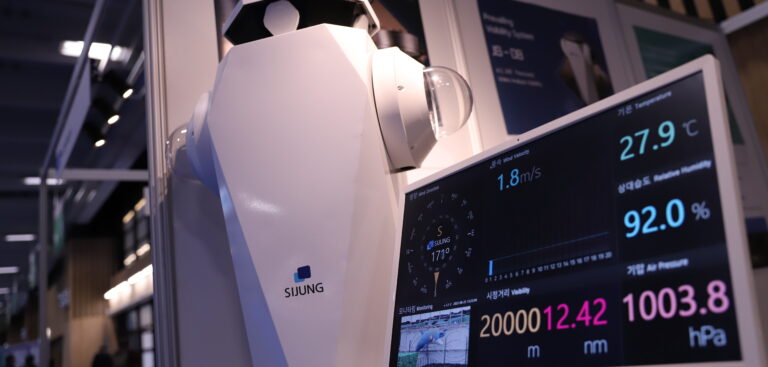
At Meteorological Technology World Expo 2022, currently being held in Paris, France, Sijung is showcasing its artificial intelligence-based video analysis visibility system, the prevailing visibility system JS-08.

The system can measure the runway visibility and dominance visibility of an aerodrome every minute through two 180° panoramic cameras. Sijung claims that this is the first automatic measuring instrument developed for prevailing visibility. By removing the human element previously required to perform this task, the automated solution will save manpower and be useful for measuring runway visibility in the aviation sector.

Prevailing visibility is calculated by measuring each of the eight orientations (45°). Using a panoramic camera, the JS-08 solution measures the extinction coefficient in each of the eight directions to calculate the visibility and then find the dominant visibility. The calculation method finds the darkest part that is reflected from an object of 24 or more points of known distance on the screen and then inversely calculates the value to find the extinction coefficient.

Sintae Chae, president of Sijung, said at the show, “The old-school fashion of visibility meters has problems. For example, if something blows into its vision, like spider webs, it incorrectly says there is fog. So, I have developed this camera solution to emulate what we do with real human eyes. As the camera can spin, it can calculate the real fog from all directions. Using a real camera also makes the data easier for the human eye to understand. The old model uses numbers, which means that people can’t make sense of anomalies, like when something is blocking the sensor.”

Previous ArticleEXPO NEWS: Darrera’s data buoys make their show debut
Next Article EXPO: More news live from Day 2 of the show!

Read Similar Stories

Climate Measurement

China inaugurates 27th national climate observatory in Hebei

April 9, 20262 Mins Read
Solar

Mauna Loa Solar Observatory reopens to support Artemis II mission

April 8, 20262 Mins Read
Data

Bureau of Meteorology to install temporary weather radar to restore network coverage in Wyndham, Western Australia

March 20, 20262 Mins Read
Latest News

Northumbria University secures £4m to study Earth’s radiation belts

April 16, 2026

AI model improves real-time prediction of wildfire spread

April 16, 2026

Study identifies atmospheric trigger behind flash droughts in Puerto Rico

April 15, 2026

Receive breaking stories and features in your inbox each week, for free


Enter your email address:


Supplier Spotlights
  • EUMETSAT
Getting in Touch
  • Contact Us / Advertise
  • Meet the Editors
  • Media Pack
  • Free Weekly E-Newsletter
Our Social Channels
  • Facebook
  • LinkedIn
© 2026 UKi Media & Events a division of UKIP Media & Events Ltd
  • Cookie Policy
  • Privacy Policy
  • Terms and Conditions
  • Notice and Takedown Policy

Type above and press Enter to search. Press Esc to cancel.