

Close Menu
Meteorological Technology International
  • News
    • A-E
      • Agriculture
      • Automated Weather Stations
      • Aviation
      • Climate Measurement
      • Data
      • Developing Countries
      • Digital Applications
      • Early Warning Systems
      • Extreme Weather
    • G-P
      • Hydrology
      • Lidar
      • Lightning Detection
      • New Appointments
      • Nowcasting
      • Numerical Weather Prediction
      • Polar Weather
    • R-S
      • Radar
      • Rainfall
      • Remote Sensing
      • Renewable Energy
      • Satellites
      • Solar
      • Space Weather
      • Supercomputers
    • T-Z
      • Training
      • Transport
      • Weather Instruments
      • Wind
      • World Meteorological Organization
      • Meteorological Technology World Expo
  • Features
  • Online Magazines
    • January 2026
    • April 2025
    • January 2025
    • September 2024
    • April 2024
    • Archive Issues
    • Subscribe Free!
  • Opinion
  • Videos
  • Supplier Spotlight
  • Expo
LinkedIn X (Twitter) Facebook
  • Sign-up for Free Weekly E-Newsletter
  • Meet the Editors
  • Contact Us
  • Media Pack
LinkedIn Facebook
Subscribe
Meteorological Technology International
  • News
      • Agriculture
      • Automated Weather Stations
      • Aviation
      • Climate Measurement
      • Data
      • Developing Countries
      • Digital Applications
      • Early Warning Systems
      • Extreme Weather
      • Hydrology
      • Lidar
      • Lightning Detection
      • New Appointments
      • Nowcasting
      • Numerical Weather Prediction
      • Polar Weather
      • Radar
      • Rainfall
      • Remote Sensing
      • Renewable Energy
      • Satellites
      • Solar
      • Space Weather
      • Supercomputers
      • Training
      • Transport
      • Weather Instruments
      • Wind
      • World Meteorological Organization
      • Meteorological Technology World Expo
  • Features
  • Online Magazines
    1. January 2026
    2. September 2025
    3. April 2025
    4. January 2025
    5. September 2024
    6. April 2024
    7. January 2024
    8. September 2023
    9. April 2023
    10. Archive Issues
    11. Subscribe Free!
    Featured
    November 27, 2025

    In this Issue – January 2026

    By Hazel KingNovember 27, 2025
    Recent

    In this Issue – January 2026

    November 27, 2025

    In this Issue – September 2025

    August 11, 2025

    In this Issue – April 2025

    April 15, 2025
  • Opinion
  • Videos
  • Supplier Spotlight
  • Expo
Facebook LinkedIn
Subscribe
Meteorological Technology International
Climate Measurement

NCAS helps launch drought forecasting tool for Africa

William AtkinsonBy William AtkinsonAugust 10, 20233 Mins Read
Share LinkedIn Facebook Twitter Email
Credit: Pixabay
Share
LinkedIn Facebook Twitter Email

Researchers have successfully implemented a forecasting tool to assess the risk of droughts occurring across Africa.

Commenting on how the new TAMSAT-ALERT tool works, Dr Vicky Boult, research scientist at the National Centre for Atmospheric Science (NCAS) and the University of Reading, said, “TAMSAT-ALERT uses a number of meteorological variables, including rainfall, to drive a land-surface model. The model simulates the movement of water through the land surface, considering both the type of soil and the vegetation, to estimate soil moisture.”

TAMSAT-ALERT soil moisture forecasts are produced every five days for the whole of Africa and look 150 days into the future. The forecasts are produced by researchers at NCAS, the National Centre for Earth Observation and the University of Reading. The forecasts can reliably anticipate drought several months before impacts are felt, and are useful for a range of decision-making processes across agricultural, humanitarian and conservation sectors.

Agricultural decision support
Across much of Africa, smallholder farmers rarely have access to irrigation systems and instead rely on highly variable seasonal rainfall to support crop growth. Reliable information on the likelihood of drought can help inform decisions about when to prepare land and plant crops, or whether to plant drought-tolerant crops that season.

TAMSAT-ALERT works in collaboration with the One Acre Fund, an agricultural service supporting Africa’s smallholder farmers. Together they have been able to provide planting date recommendations via SMS to more than a million farmers in eastern and southern Africa. After running operationally for three years, farmers receiving TAMSAT-ALERT planting date advice have seen on average a 10% improvement in crop yields.

Forecast-based humanitarian action
Historically, humanitarian organizations have responded after extreme weather events have occurred. Forecast-based action enables them to act in a timely way before an extreme weather event occurs.

Early drought warnings provided by TAMSAT-ALERT enable disaster risk management organizations – such as Kenya’s National Drought Management Authority – to trigger early action to prepare communities for drought. Preparations such as storing water or planting drought-tolerant crop varieties can minimize the impacts of the drought, helping to protect the lives and livelihoods of local communities.

Forecast-based elephant conservation
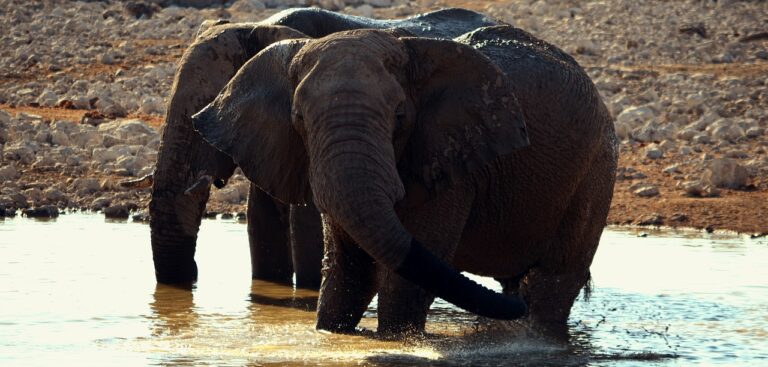
When droughts occur, the lack of food and water not only affects people, but also wildlife. Elephants require huge amounts of food and water. When droughts occur, elephants compete with people and their livestock for resources, raiding farmers’ crops and damaging local communities’ water stores.

Human-elephant conflict can be devastating to communities who rely on agriculture for their food and livelihoods, and also to elephant populations.

“In some parts of Africa, human-elephant conflict is now a leading cause of non-natural elephant mortality and communities face the daily fear of losing their lives or livelihoods to hungry elephants,” said Dr Boult.

TAMSAT-ALERT’s early drought predictions enable elephant conservation organizations to anticipate periodic increases in human-elephant conflict caused by drought. They can then increase measures to prevent human-elephant conflict, for example, strategically deploying wildlife rangers or installing crop-protection fences.

Previous ArticleIn this Issue – September 2023
Next Article Global air and ocean temperatures reach new highs

Read Similar Stories

Extreme Weather

AI model improves real-time prediction of wildfire spread

April 16, 20263 Mins Read
Climate Measurement

Study identifies atmospheric trigger behind flash droughts in Puerto Rico

April 15, 20263 Mins Read
Satellites

AI tool uses weather satellite data to map ocean currents in near real time

April 14, 20263 Mins Read
Latest News

Northumbria University secures £4m to study Earth’s radiation belts

April 16, 2026

AI model improves real-time prediction of wildfire spread

April 16, 2026

Study identifies atmospheric trigger behind flash droughts in Puerto Rico

April 15, 2026

Receive breaking stories and features in your inbox each week, for free


Enter your email address:


Supplier Spotlights
  • Senseca
Getting in Touch
  • Contact Us / Advertise
  • Meet the Editors
  • Media Pack
  • Free Weekly E-Newsletter
Our Social Channels
  • Facebook
  • LinkedIn
© 2026 UKi Media & Events a division of UKIP Media & Events Ltd
  • Cookie Policy
  • Privacy Policy
  • Terms and Conditions
  • Notice and Takedown Policy

Type above and press Enter to search. Press Esc to cancel.