


Close Menu
Meteorological Technology International
  • News
    • A-E
      • Agriculture
      • Automated Weather Stations
      • Aviation
      • Climate Measurement
      • Data
      • Developing Countries
      • Digital Applications
      • Early Warning Systems
      • Extreme Weather
    • G-P
      • Hydrology
      • Lidar
      • Lightning Detection
      • New Appointments
      • Nowcasting
      • Numerical Weather Prediction
      • Polar Weather
    • R-S
      • Radar
      • Rainfall
      • Remote Sensing
      • Renewable Energy
      • Satellites
      • Solar
      • Space Weather
      • Supercomputers
    • T-Z
      • Training
      • Transport
      • Weather Instruments
      • Wind
      • World Meteorological Organization
      • Meteorological Technology World Expo
  • Features
  • Online Magazines
    • January 2026
    • April 2025
    • January 2025
    • September 2024
    • April 2024
    • Archive Issues
    • Subscribe Free!
  • Opinion
  • Videos
  • Supplier Spotlight
  • Expo
LinkedIn X (Twitter) Facebook
  • Sign-up for Free Weekly E-Newsletter
  • Meet the Editors
  • Contact Us
  • Media Pack
LinkedIn Facebook
Subscribe
Meteorological Technology International
  • News
      • Agriculture
      • Automated Weather Stations
      • Aviation
      • Climate Measurement
      • Data
      • Developing Countries
      • Digital Applications
      • Early Warning Systems
      • Extreme Weather
      • Hydrology
      • Lidar
      • Lightning Detection
      • New Appointments
      • Nowcasting
      • Numerical Weather Prediction
      • Polar Weather
      • Radar
      • Rainfall
      • Remote Sensing
      • Renewable Energy
      • Satellites
      • Solar
      • Space Weather
      • Supercomputers
      • Training
      • Transport
      • Weather Instruments
      • Wind
      • World Meteorological Organization
      • Meteorological Technology World Expo
  • Features
  • Online Magazines
    1. January 2026
    2. September 2025
    3. April 2025
    4. January 2025
    5. September 2024
    6. April 2024
    7. January 2024
    8. September 2023
    9. April 2023
    10. Archive Issues
    11. Subscribe Free!
    Featured
    November 27, 2025

    In this Issue – January 2026

    By Hazel KingNovember 27, 2025
    Recent

    In this Issue – January 2026

    November 27, 2025

    In this Issue – September 2025

    August 11, 2025

    In this Issue – April 2025

    April 15, 2025
  • Opinion
  • Videos
  • Supplier Spotlight
  • Expo
Facebook LinkedIn
Subscribe
Meteorological Technology International
Supercomputers

NOAA upgrades supercomputers to enhance US weather forecasts

Dan SymondsBy Dan SymondsAugust 11, 20233 Mins Read
Share LinkedIn Facebook Twitter Email
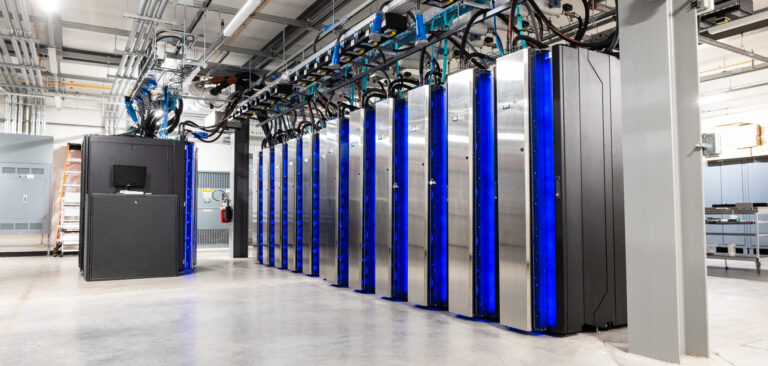
Twin supercomputers Dogwood (pictured here) and Cactus are the newest additions to NOAA's weather and climate operational supercomputing system. Credit: General Dynamics Information Technology/NOAA
Share
LinkedIn Facebook Twitter Email

The US Department of Commerce and NOAA have expanded the capacity of the Weather and Climate Operational Supercomputing System (WCOSS) by 20%. The increased computing power and storage will help improve forecast model guidance for years to come and enable other weather prediction advances.

Michael C Morgan, assistant secretary of commerce for environmental observation and prediction, said, “Our investment in high-performance computing will pay off with better US weather modeling. Forecast model upgrades made possible by this increased computing capacity will bring improved and timely forecasts and warnings that better protect life and property.”

Faster supercomputing will allow NOAA to run more complex forecast models while increased storage space will enable more data to be fed and assimilated into the system. These improvements will permit upgrades to NOAA’s weather forecasting systems and models over the next few years, including:

Upgrades to the US Global Forecast System will make it higher-resolution. The model’s horizontal resolution will improve to 9km, compared to 13km in the current version. This upgrade will help smaller-scale features to be seen and simulated, improving model accuracy and overall model performance.

A new Rapid Refresh Forecast System, which will enable larger ensembles with more data included, providing a measure of certainty in a particular forecast that can lead to better decision making. These updates also allow for more advanced high-resolution data-assimilation techniques.

Upgrades to the Global Ensemble Forecast System, which will more accurately capture what is known as radiatively active aerosols to better model emissions such as wildfire smoke, dust and fog.

Expansion in compute power and storage, which will provide operational capacity to implement research and development advancements made through NOAA’s Earth Prediction Innovation Center.

With this upgrade, the twin supercomputers, located in Manassas, Virginia, and Phoenix, Arizona, now operate at a speed of 14.5 petaflops each, and together, the forecast system can process 29 quadrillion calculations per second. Coupled with NOAA’s research and development supercomputers in West Virginia, Tennessee, Mississippi and Colorado, which have a combined capacity of 20 petaflops, the supercomputing capacity supporting NOAA’s new operational prediction and research is now 49 petaflops.

Ken Graham, director of NOAA’s National Weather Service, said, “This increased supercomputing power allows for upgrades to specific modeling systems that will help weather forecasters deliver more accurate weather forecasts, watches and warnings and improved certainty in a forecast.”

NOAA has made significant advances to its forecast models since WCOSS was implemented in June 2022. Last month, the Hurricane Analysis and Forecast System went operational. In June, the Probabilistic Storm Surge model upgrade allowed for storm surge forecasting for the contiguous USA and new forecasts for surge, tide and waves for Puerto Rico and the US Virgin Islands.

NOAA’s weather forecasting systems and models are developed and managed by the Environmental Modeling Center in College Park, Maryland, which is part of the National Weather Service, in collaboration with NOAA research scientists and the broader modeling community. Over 20 operational numerical weather prediction models are run on WCOSS.

In 2020, NOAA contracted with the company General Dynamics Information Technology (GDIT) on the supercomputer acquisition, upgrade, products and services. The eight-year contract with a two-year optional renewal provides a total managed service.

Previous ArticleGlobal air and ocean temperatures reach new highs
Next Article Colorado project to improve sublimation measurements for mountain snowpack

Read Similar Stories

Aviation

Met Office launches platform to support needs of evolving aviation industry

March 24, 20262 Mins Read
Automated Weather Stations

Chongqing expands AI-powered weather services to improve warning times

March 5, 20263 Mins Read
Data

Met Office rolls out major forecasting system upgrade

February 9, 20263 Mins Read
Latest News

Northumbria University secures £4m to study Earth’s radiation belts

April 16, 2026

AI model improves real-time prediction of wildfire spread

April 16, 2026

Study identifies atmospheric trigger behind flash droughts in Puerto Rico

April 15, 2026

Receive breaking stories and features in your inbox each week, for free


Enter your email address:


Supplier Spotlights
  • ZOGLAB Microsystem Co., Ltd
Getting in Touch
  • Contact Us / Advertise
  • Meet the Editors
  • Media Pack
  • Free Weekly E-Newsletter
Our Social Channels
  • Facebook
  • LinkedIn
© 2026 UKi Media & Events a division of UKIP Media & Events Ltd
  • Cookie Policy
  • Privacy Policy
  • Terms and Conditions
  • Notice and Takedown Policy

Type above and press Enter to search. Press Esc to cancel.