

The World Meteorological Organization (WMO) has published the second part to its ‘Guidelines on Multi-hazard Impact-based Forecast and Warning Services’ reference document, first produced in 2015.
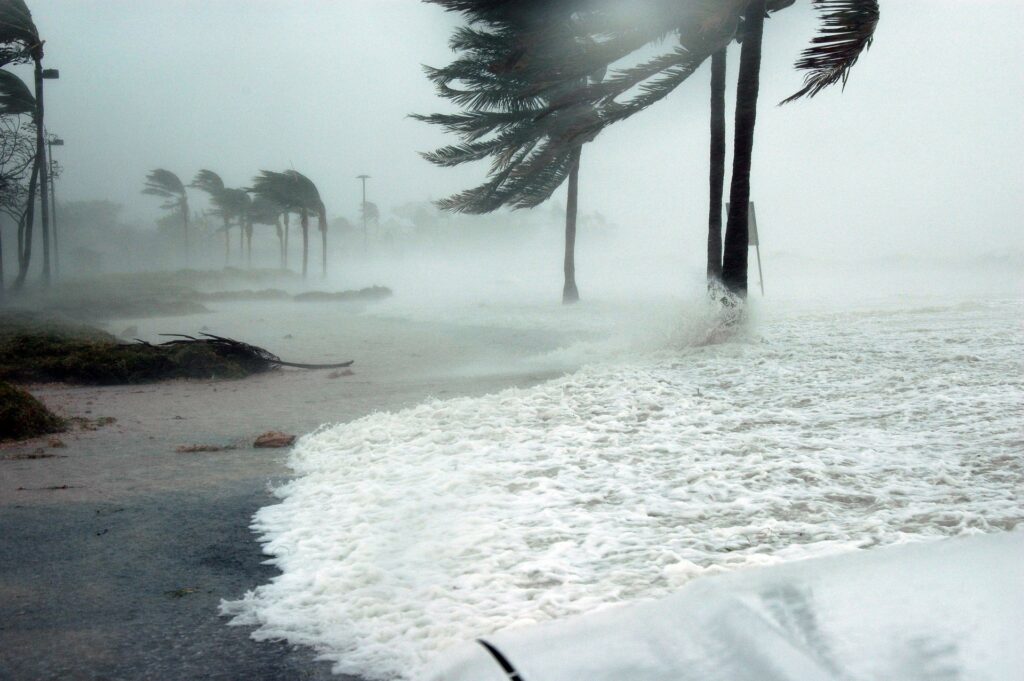
Users are provided with practical information and case studies on how to move from standard weather forecasts and warnings to the provision of impact-based forecast and warning services of multiple cascading hazards, such as the flooding, storm surge, wind damage and impacts on infrastructure, transport, energy and health systems that come with a tropical cyclone.
According to the WMO, as the economic and human impacts of extreme weather and climate change increase, forecasts not just of what the weather will be, but of what the weather will do, are vital to save lives and livelihoods. As a result, there is a paradigm shift toward impact-based forecasting, driven by the international meteorological and humanitarian community and facilitated by leaps in science and technology.
Cyrille Honoré, director, Disaster Risk Reduction and Public Services Branch at the WMO, said, “Over the last 50 years there has been a five-fold increase in recorded weather, climate and water-related hazards, with long-lasting socioeconomic consequences. The number of deaths has decreased thanks to increased availability of accurate and timely warnings. But it is still unnecessarily high, as a result of lack of understanding of potential impacts.”
Part II of the guidelines benefits from research into exposure and vulnerability and incorporates extensive input from both service providers and the user community. It underlines the paramount importance of partnerships and dialog between scientists, forecasters, disaster managers, community leaders and decision makers.
The publication also embraces the concepts of anticipatory actions – using weather and climate information to underpin humanitarian interventions such as shelter strengthening before a tropical cyclone makes landfall, and using forecast-based financing to limit the impact of a drought or flood.
The new guidelines were presented by Prof. Celeste Saulo, WMO first vice-president and director of the Argentinian National Meteorological Service, at the 9th Global Dialogue Platform on Anticipatory Humanitarian Action, at a virtual session entitled ‘Meeting the challenges of future crises: Protecting lives and livelihoods with anticipatory action.’
“No one can do this alone,” said Saulo. “You can have the best protection agency and the best weather service. But if these organizations cannot work together, the public will not get the best of us. Partnerships is the most important aspect.”
She cited the example of Argentina’s new warning system for heatwaves and extreme temperatures. It was co-designed with input from experts at the Ministry of Health as well as the meteorological community because of the need to put the emphasis on health impacts, especially for vulnerable groups.
The guidelines include new chapters, based on recommendations from a symposium of service providers, users and funders hosted by the Met Office, the UK’s national meteorological service, in December 2019. The symposium brought together participants from over 20 national meteorological and hydrological services, research institutes and international organizations including the International Federation of Red Cross and Red Crescent Societies, the World Bank, the World Food Programme and Climate Risk and Early Warning Systems (CREWS).
Will Lang, head of civil contingencies, UK Met Office, said, “Bringing organizations together in the symposium provided an opportunity to share experience and expertise of impact-based forecasting and anticipatory action. The new guidelines will help organizations around the world to develop services which can help protect lives and livelihoods.”
Maarten van Aalst, director of the Red Cross Red Crescent Climate Centre, said, “Protecting communities at the frontlines of the climate crisis is a key priority for the Red Cross Red Crescent. We cannot afford to just respond to ever more disasters, so we must anticipate what’s coming our way, to reduce risks in the long term and prepare effectively when a forecast arrives.
“Impact-based forecasting plays a critical role to enable anticipatory action, transforming complex scientific information into actionable insights that enable humanitarian interventions, such as shelter strengthening by farmers in the Philippines before a typhoon makes landfall, or distributing alpaca veterinary kits to protect the livelihoods of families in the Andean region of Peru against coldwaves,” he said.
To download a copy of the updated reference document, click here.