


Close Menu
Meteorological Technology International
  • News
    • A-E
      • Agriculture
      • Automated Weather Stations
      • Aviation
      • Climate Measurement
      • Data
      • Developing Countries
      • Digital Applications
      • Early Warning Systems
      • Extreme Weather
    • G-P
      • Hydrology
      • Lidar
      • Lightning Detection
      • New Appointments
      • Nowcasting
      • Numerical Weather Prediction
      • Polar Weather
    • R-S
      • Radar
      • Rainfall
      • Remote Sensing
      • Renewable Energy
      • Satellites
      • Solar
      • Space Weather
      • Supercomputers
    • T-Z
      • Training
      • Transport
      • Weather Instruments
      • Wind
      • World Meteorological Organization
      • Meteorological Technology World Expo
  • Features
  • Online Magazines
    • January 2026
    • April 2025
    • January 2025
    • September 2024
    • April 2024
    • Archive Issues
    • Subscribe Free!
  • Opinion
  • Videos
  • Supplier Spotlight
  • Expo
LinkedIn X (Twitter) Facebook
  • Sign-up for Free Weekly E-Newsletter
  • Meet the Editors
  • Contact Us
  • Media Pack
LinkedIn Facebook
Subscribe
Meteorological Technology International
  • News
      • Agriculture
      • Automated Weather Stations
      • Aviation
      • Climate Measurement
      • Data
      • Developing Countries
      • Digital Applications
      • Early Warning Systems
      • Extreme Weather
      • Hydrology
      • Lidar
      • Lightning Detection
      • New Appointments
      • Nowcasting
      • Numerical Weather Prediction
      • Polar Weather
      • Radar
      • Rainfall
      • Remote Sensing
      • Renewable Energy
      • Satellites
      • Solar
      • Space Weather
      • Supercomputers
      • Training
      • Transport
      • Weather Instruments
      • Wind
      • World Meteorological Organization
      • Meteorological Technology World Expo
  • Features
  • Online Magazines
    1. January 2026
    2. September 2025
    3. April 2025
    4. January 2025
    5. September 2024
    6. April 2024
    7. January 2024
    8. September 2023
    9. April 2023
    10. Archive Issues
    11. Subscribe Free!
    Featured
    November 27, 2025

    In this Issue – January 2026

    By Hazel KingNovember 27, 2025
    Recent

    In this Issue – January 2026

    November 27, 2025

    In this Issue – September 2025

    August 11, 2025

    In this Issue – April 2025

    April 15, 2025
  • Opinion
  • Videos
  • Supplier Spotlight
  • Expo
Facebook LinkedIn
Subscribe
Meteorological Technology International
Early Warning Systems

ICPAC’s early warning systems project expands to Uganda and Rwanda

Elizabeth BakerBy Elizabeth BakerMarch 18, 20253 Mins Read
Share LinkedIn Facebook Twitter Email
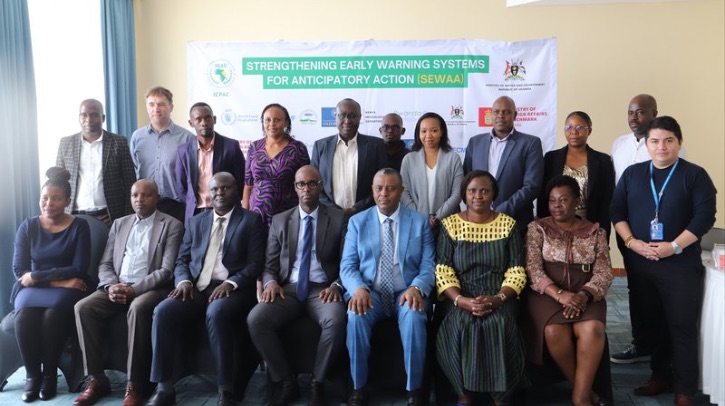
The IGAD Climate Prediction and Applications Centre (ICPAC) and its partners have launched the expansion of the Strengthening Early Warning Systems for Anticipatory Action (SEWAA) project for Uganda and Rwanda.
Share
LinkedIn Facebook Twitter Email

The IGAD Climate Prediction and Applications Centre (ICPAC) and its partners have launched the expansion of the Strengthening Early Warning Systems for Anticipatory Action (SEWAA) project to Uganda and Rwanda.

AI-driven forecasts

The project’s expansion, supported by the government of Denmark and the World Food Programme (WFP), builds on its successes in the ongoing pilot countries of Kenya and Ethiopia, where machine learning (ML) and artificial intelligence (AI) are being leveraged to improve forecasting, early warning systems (EWS) and anticipatory action.

By integrating advanced climate technologies, including AI-driven solutions, into national forecasting systems, the project is intended to improve the accuracy of early warning systems (EWS), enabling governments, development and humanitarian agencies to act before disasters strike.

Protecting against extreme weather

This proactive approach seeks to significantly reduce the loss of lives and livelihoods caused by extreme weather events such as droughts and floods, which are prone in the region. In addition, SEWAA’s expansion to other IGAD member states is expected to foster collaboration between regional and national institutions, ensuring that early warning systems are inclusive, aligned and responsive to each country’s own climate challenges.

Dr Abdi Fidar, officer-in-charge at ICPAC, noted, “The IGAD region is one that is most vulnerable to climate change impacts, with extreme weather events such as droughts and floods becoming more frequent and severe. SEWAA ‘s inception to Uganda and Rwanda marks a significant milestone in strengthening our collective ability to anticipate and respond to climate shocks before they escalate into disasters, but also a strong message on our strategic partnership with WFP, which has been at the forefront of coordinating the innovation.

“This initiative reinforces the importance of IGAD ’s regional cooperation in building resilience and safeguarding lives and livelihoods. By leveraging AI-driven solutions, the project will empower governments and institutions with the information needed to make proactive decisions and enhance disaster preparedness across the region.”

Dr Bob Ogwang, the acting commissioner at the Department of Meteorological Services-Uganda, stated, “The impact of climate change is already being felt in Uganda. Temperatures are on the rise in all regions. The intensity and frequency of extreme weather events are increasing, with devastating impacts. It is, therefore, important to strengthen early warning systems by enhancing the capacity to generate and disseminate high-quality early warning information on weather and climate for planning and decision making. This project will certainly support our quest for improved forecasting capability.”

Fetene Teshome, director general of the Ethiopian Meteorological Institute and president of World Meteorological Organisation (WMO) Regional Association 1 (Africa), said, “There is no doubt that access to early warning systems to all, disaster-risk information and sustainable financing are of critical importance in reducing the impact of disasters on human life, economies and infrastructure. Thus, priority should now be given to producing very real-time weather forecasts by use of new techniques.”

In related news, the United Nations Development Programme (UNDP) and the Government of the People’s Republic of China recently officially launched the Tailored Intelligence for Actionable Early Warning Systems (TIAEWS) project in Pakistan. Click here to read the full story.

Previous ArticleDeep learning model enhances lightning prediction
Next Article FEATURE: How are NOAA’s latest buoys tackling ocean acidification?

Read Similar Stories

Extreme Weather

AI model improves real-time prediction of wildfire spread

April 16, 20263 Mins Read
Climate Measurement

Study identifies atmospheric trigger behind flash droughts in Puerto Rico

April 15, 20263 Mins Read
Climate Measurement

Regional training aims to improve flood forecasting in Central Africa

April 1, 20263 Mins Read
Latest News

Northumbria University secures £4m to study Earth’s radiation belts

April 16, 2026

AI model improves real-time prediction of wildfire spread

April 16, 2026

Study identifies atmospheric trigger behind flash droughts in Puerto Rico

April 15, 2026

Receive breaking stories and features in your inbox each week, for free


Enter your email address:


Supplier Spotlights
  • GAMIC GmbH
Getting in Touch
  • Contact Us / Advertise
  • Meet the Editors
  • Media Pack
  • Free Weekly E-Newsletter
Our Social Channels
  • Facebook
  • LinkedIn
© 2026 UKi Media & Events a division of UKIP Media & Events Ltd
  • Cookie Policy
  • Privacy Policy
  • Terms and Conditions
  • Notice and Takedown Policy

Type above and press Enter to search. Press Esc to cancel.