


Global warming of 1.5°C (2.7°F) alone will result in several unavoidable climate hazards over the next two decades, warns the latest report from the Intergovernmental Panel on Climate Change (IPCC), released today (February 28).
Even temporarily exceeding this warming level will result in additional severe impacts, some of which will be irreversible. Risks for society will increase, including to infrastructure and low-lying coastal settlements.
According to the report, human-induced climate change is causing dangerous and widespread disruption in nature, despite efforts to reduce the risks. It is also the people and ecosystems least able to cope with the disruption that are being the hardest hit.
Hoesung Lee, chair of the IPCC, said, “This report is a dire warning about the consequences of inaction. It shows that climate change is a grave and mounting threat to our well-being and a healthy planet. Our actions today will shape how people adapt and nature responds to increasing climate risks.”
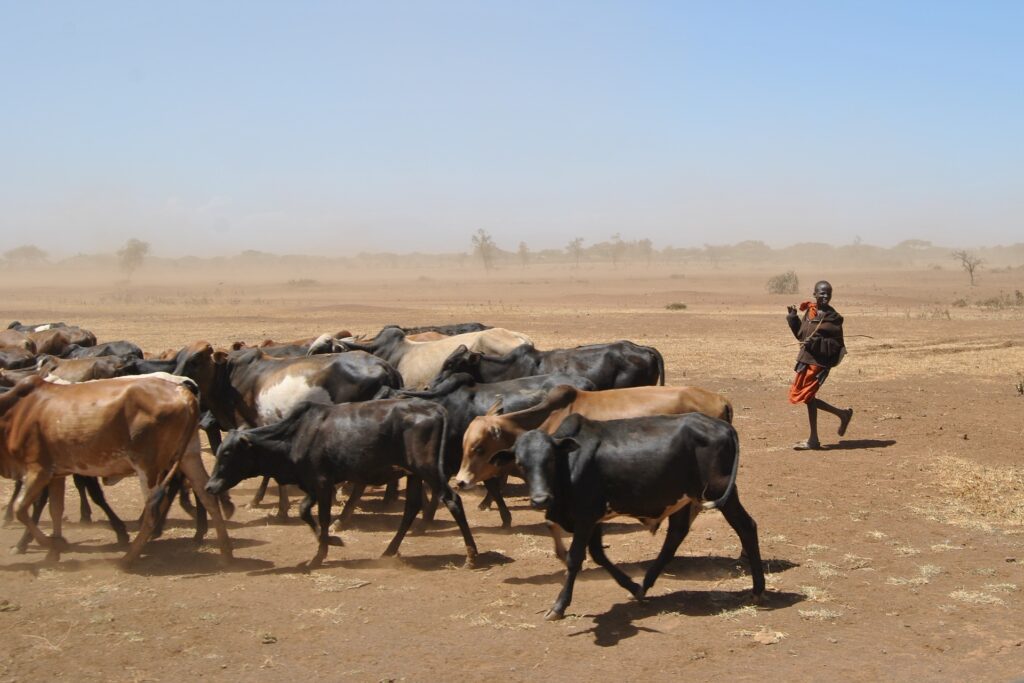
Increased heatwaves, droughts and floods are already exceeding the tolerance thresholds of plants and animals, driving mass mortalities in species such as trees and corals. These weather extremes are occurring simultaneously, causing cascading impacts that are increasingly difficult to manage. They have exposed millions of people to acute food and water insecurity, especially in Africa, Asia, Central and South America, on Small Islands and in the Arctic.
The report states that to avoid the mounting loss of life, biodiversity and infrastructure, ambitious, accelerated action is required to adapt to climate change while making rapid, deep cuts in greenhouse gas emissions. However, it states that so far, progress on adaptation is uneven and there are increasing gaps between action taken and what is needed to deal with the increasing risks. These gaps are largest among lower-income populations.
Petteri Taalas, the WMO’s secretary-general, said, “Our atmosphere today is on steroids, doped with fossil fuels. This is already leading to stronger, longer and more frequent extreme weather events. Climate-change-induced disasters come with high human and economic impacts. More than four in 10 people in the world live in contexts highly vulnerable to climate change. Global hotspots are found in parts of Africa, southern Asia, Small Island Developing States, and Central and South America.
“In many of those countries, population growth, urbanization and unsustainable development practices are boosting the exposure of people and ecosystems to climate change. But all countries are affected, as we have seen in Germany, the USA and Canada last year. It is essential to raise the ambition level of climate mitigation. That would also have a positive impact on air quality and is vital to tackle the looming water crisis and sea-level rise. Climate mitigation also offers great business opportunities in many sectors, like energy, transport, industry and nutrition.
“Besides mitigation, it is more and more critical to pay attention to adaptation, since the negative trend in weather extremes will continue for the coming decades, and sea levels will rise for centuries due to the record high concentration of carbon dioxide. One of the powerful ways to adapt is to invest in early warning services. But the basic weather and climate observing networks have severe gaps in Africa and Island states. Only half of the 193 members of WMO have proper weather, climate and hydrological services. This leads to higher human and economic losses,” Taalas said.
The Working Group II report, Climate Change 2022: Impacts, Adaptation and Vulnerability, is the second installment of the IPCC’s Sixth Assessment Report (AR6), which will be completed later this year.
“This report recognizes the interdependence of climate, biodiversity and people and integrates natural, social and economic sciences more strongly than earlier IPCC assessments,” said Lee. “It emphasizes the urgency of immediate and more ambitious action to address climate risks. Half measures are no longer an option.”
To adapt to a changing climate, the report provides new insights into nature’s potential not only to reduce climate risks but also to improve people’s lives.
Hans-Otto Pörtner, IPCC Working Group II co-chair, said, “Healthy ecosystems are more resilient to climate change and provide life-critical services such as food and clean water. By restoring degraded ecosystems and effectively and equitably conserving 30-50% of Earth’s land, freshwater and ocean habitats, society can benefit from nature’s capacity to absorb and store carbon, and we can accelerate progress toward sustainable development, but adequate finance and political support are essential.”
Among other areas, the report provides a detailed assessment of climate change impacts, risks and adaptation in cities, where more than half the world’s population lives. People’s health, lives and livelihoods, as well as property and critical infrastructure, including energy and transportation systems, are being increasingly adversely affected by hazards from heatwaves, storms, drought and flooding as well as slow-onset changes, including sea-level rise.
Debra Roberts, IPCC Working Group II co-chair, said, “Together, growing urbanization and climate change create complex risks, especially for those cities that already experience poorly planned urban growth, high levels of poverty and unemployment, and a lack of basic services. But cities also provide opportunities for climate action – green buildings, reliable supplies of clean water and renewable energy, and sustainable transport systems that connect urban and rural areas can all lead to a more inclusive, fairer society.”
There is increasing evidence of adaptation that has had unintended consequences, for example destroying nature, putting people’s lives at risk or increasing greenhouse gas emissions. This can be avoided by involving everyone in planning, paying attention to equity and justice, and drawing on indigenous and local knowledge.
When discussing the timeline for action, the report states that climate-resilient development is already challenging at current warming levels. It will become more limited if global warming exceeds 1.5°C (2.7°F). In some regions, it will be impossible if global warming exceeds 2°C (3.6°F).
“The scientific evidence is unequivocal: climate change is a threat to human well-being and the health of the planet. Any further delay in concerted global action will miss a brief and rapidly closing window to secure a liveable future,” said Pörtner.
To download a copy of the Working Group II report, Climate Change 2022: Impacts, Adaptation and Vulnerability, click here.